Tel: +86-0573-89103923 / +86 182 6841 1181

E-mail:globalmarketing@xusen.com



 English
 عربى
عربى 简体中文
简体中文What Is Melamine Cyanurate (MCA) and How Do You Actually Use It as a Flame Retardant?
2026-06-10
Content
- 1 What Melamine Cyanurate (MCA) Actually Is and Why It Matters
- 2 How MCA Stops a Fire: The Three-Part Mechanism
- 3 Particle Size: The Variable That Determines Real-World Performance
- 4 MCA in Polyamide (PA6 and PA66): The Primary Application
- 5 MCA in TPU, Epoxy, and Other Polymer Systems
- 6 Synergistic FR Systems Using MCA: Getting More from Less
- 7 Where MCA Falls Short: Limitations That Affect Grade Selection
- 8 How to Evaluate MCA Quality When Sourcing
What Melamine Cyanurate (MCA) Actually Is and Why It Matters
Melamine Cyanurate — commonly abbreviated as MCA or MC — is a 1:1 crystalline complex formed by reacting melamine (C₃H₆N₆) with cyanuric acid (C₃H₃N₃O₃) in an aqueous precipitation process. Its CAS number is 37640-57-6, and its combined molecular formula is C₆H₉N₉O₃, with a molecular weight of 255.2 g/mol. The defining structural feature of MCA is an exceptionally dense hydrogen-bond network between the melamine and cyanuric acid layers — this layered architecture is responsible for both its high thermal stability and its behavior under fire conditions.
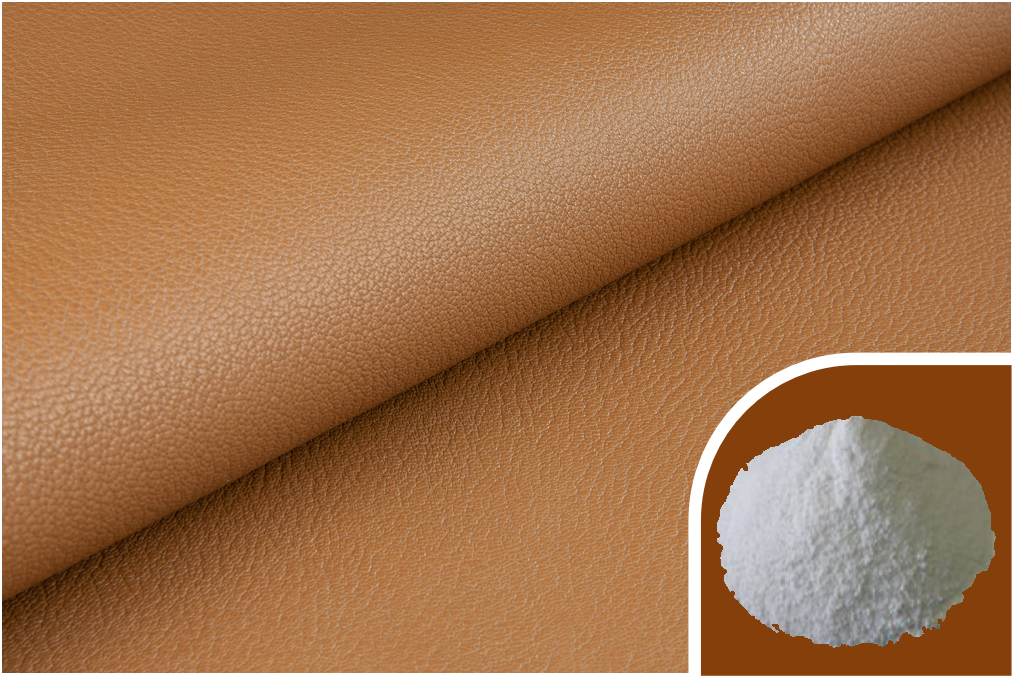
In practical terms, MCA is a white crystalline powder with a specific gravity of approximately 1.7 g/cm³, virtually no vapor pressure at room temperature, and a decomposition onset above 320°C. It contains roughly 59% nitrogen by weight — an unusually high active nitrogen loading that translates directly into flame-retardant efficiency. It is essentially non-toxic, generates very low smoke, and carries no halogens, making it one of the most environmentally acceptable flame retardants available for polymer applications. These properties explain why MCA has steadily displaced halogenated alternatives in engineering plastics over the past two decades, particularly in polyamide compounds used in electronics and automotive components.
How MCA Stops a Fire: The Three-Part Mechanism
MCA's flame-retardant action is not a single event — it's a sequence of physical and chemical responses triggered as temperature rises. Understanding all three stages explains both why MCA works so well in certain polymer systems and why it underperforms in others.
Endothermic Decomposition and Cooling
Above approximately 320–330°C, MCA begins to dissociate back into melamine and cyanuric acid. This decomposition is strongly endothermic — the reaction absorbs heat from the surrounding polymer matrix, lowering the local surface temperature and slowing the rate at which the polymer generates combustible volatile gases. This cooling effect delays ignition and reduces the intensity of the combustion event even before any gas-phase chemistry takes place. The endothermic energy absorption is substantial enough to act as a meaningful heat sink during the early stages of a fire.
Inert Gas Dilution in the Flame Zone
As decomposition continues, MCA releases nitrogen-rich gases — primarily ammonia (NH₃) and molecular nitrogen (N₂) — into the gas phase above the burning polymer surface. These inert gases do not burn. Instead, they dilute the concentration of oxygen and combustible volatiles in the flame zone, effectively starving the flame of the fuel-oxygen mixture it needs to sustain combustion. This gas-phase mechanism is the dominant mode of action for MCA in unfilled polyamide systems, and it is highly efficient: at typical loading levels of 8–15% in PA6 or PA66, it is sufficient to achieve UL 94 V-0 at standard test thicknesses.
Physical Barrier and Melt Flow Modification
MCA also modifies the melt flow behavior of the polymer during burning. In nylon systems specifically, MCA promotes controlled melt dripping — flaming droplets carry burning material away from the specimen, removing heat from the combustion zone and preventing sustained burning. While this behavior leads to V-2 or V-1 classification in some configurations (dripping fails the cotton indicator test), it can be exploited by formulation design. When MCA is paired with anti-drip agents or combined with other FR actives that promote char formation, the dripping is suppressed while the gas-phase benefits are retained, enabling V-0 classification.
Particle Size: The Variable That Determines Real-World Performance
Most technical datasheets for Melamine Cyanurate list the same basic properties — white powder, decomposition above 320°C, halogen-free. What they often don't emphasize clearly enough is that particle size is one of the most consequential variables in MCA performance, affecting dispersion quality, mechanical properties of the final compound, and the achievable flame-retardant rating.
Commercial MCA grades are typically classified by their D50 particle size. The most common grades in the market are:
- Fine grades (D50 ≤ 2 µm)— Best dispersion in the polymer matrix, lowest impact on mechanical properties, preferred for thin-wall injection molded parts and fiber spinning applications. Higher cost due to more intensive milling.
- Standard grades (D50 2–5 µm)— The most widely used range for PA6/PA66 injection molding. Good balance of dispersibility, processing ease, and cost. Most standard MCA-FR compounds for UL 94 V-0 are built around this particle size window.
- Coarse grades (D50 > 5 µm)— Easier to handle in bulk, lower dusting risk, but dispersion uniformity is harder to achieve. Associated with higher risk of surface blooming and reduced mechanical properties. Research indicates that MCA with crystallite dimensions above 500 Å can reduce tensile strength by 15–20% and cause surface whitening in PA66 moldings compared to finer grades at the same loading.
Moisture content is an equally important specification parameter. High-quality MCA should have moisture below 0.2% — excess moisture causes hydrolysis of the polyamide chain during melt processing, reducing molecular weight, degrading mechanical properties, and reducing the melt viscosity in ways that affect both part quality and FR performance. Always verify moisture content in the certificate of analysis (CoA), and pre-dry MCA or MCA-containing masterbatch before processing at 80°C for 4 hours minimum.
MCA in Polyamide (PA6 and PA66): The Primary Application
The polyamide system is where MCA delivers its most reliable and cost-effective performance. Non-reinforced PA6 and PA66 are the reference substrates for MCA flame retardancy, and MCA's combination of properties makes it nearly ideal for these materials: its decomposition temperature sits safely above PA's processing temperature (220–270°C), its gas-phase mechanism is highly compatible with PA's combustion chemistry, and it disperses well in the polar nylon matrix without significant compatibilization effort.
Typical Dosage and Achievable Ratings
In unfilled (non-glass-fiber) PA6 and PA66, the following loading levels and resulting flame ratings are well-established in commercial practice:
|
MCA dosage and UL 94 ratings in unfilled PA6/PA66 |
|||
|
MCA Loading (wt%) |
UL 94 Rating |
Test Thickness |
LOI Approx. |
|
6–8% |
V-2 |
1.6–3.2 mm |
25–27% |
|
10–15% |
V-0 |
1.6–3.2 mm |
28–32% |
|
15–20% |
V-0 |
0.8–1.6 mm |
30–34% |
|
20–25% |
V-0 (thin wall) |
0.4–0.8 mm |
32–36% |
These figures apply to standard-viscosity PA resin without glass fiber or other fillers. At the lower end of the loading range (6–10%), impact on tensile strength is modest — typically a reduction of under 10% compared to unmodified PA. At the upper end of the range (20–25%), impact strength can drop by 15–25%, and melt flow rate increases, which must be accounted for in part and tooling design. Using a nanoscale MCA grade in the 20–25% range can partially reverse the melt flow increase, as fine MCA particles create more friction in the melt, but this also requires more controlled processing to avoid agglomeration.
The Glass Fiber Limitation
MCA's effectiveness drops significantly when glass fiber reinforcement is added to the PA compound. Glass fibers act as a "wick" during burning — they hold the polymer melt in place rather than allowing it to flow and drip away from the flame, which means the gas-phase flame suppression mechanism of MCA must work against a more sustained and intense burn. At 30% GF loading in PA66, an MCA level that achieved V-0 in the unfilled grade typically drops to V-1 or V-2. To recover V-0 in GF-reinforced PA with MCA, loading must increase to 12–18 wt%, and co-agents such as aluminum diethylphosphinate (AlPi) are typically needed. This is why most GF-PA flame retardant systems in demanding E&E applications use phosphinate-based FR systems rather than MCA alone.
MCA in TPU, Epoxy, and Other Polymer Systems
While polyamide is the dominant application for Melamine Cyanurate, MCA is used across a range of other polymer systems — though its performance characteristics and required loading levels differ meaningfully from the PA use case.
Thermoplastic Polyurethane (TPU)
MCA is used in TPU primarily as part of multicomponent halogen-free flame retardant systems rather than as a standalone additive. Pure MCA in TPU at practical loading levels struggles to achieve V-0 classification because TPU's combustion chemistry requires both gas-phase suppression and condensed-phase char formation to achieve the necessary self-extinguishing behavior. The most effective documented formulation combines MCA with melamine polyphosphate (MPP) and aluminum diethylphosphinate (AlPi) in a three-component system: published research shows that 8 wt% MPP + 12 wt% MCA + 10 wt% AlPi in TPU reduces peak heat release rate from 2,660 kW/m² down to 452 kW/m² while achieving UL 94 V-0. In a simpler two-component system, a 1:1 ratio of MCA to AlPi at 15% total loading achieves V-0 in TPU with LOI of 27.4% and minimal mechanical property loss — tensile strength remains around 40 MPa and elongation at break approximately 530%.
Epoxy Resin
In epoxy systems, MCA is used synergistically with AlPi, where MCA handles early-stage gas-phase flame suppression while AlPi promotes condensed-phase char formation. At an optimized MCA:AlPi ratio of 2:1 and total loading of 30 wt%, epoxy composites achieve UL 94 V-0 and LOI of 33.0%. The key processing challenge in epoxy is dispersion — MCA powder tends to agglomerate in liquid resin systems, so surface modification with coupling agents (such as silane-based DL-44A) is often needed before incorporating MCA into the resin-hardener mixture.
Polyolefins and Cable Applications
MCA finds use in low-smoke zero-halogen (LSZH) cable compounds, typically in combination with magnesium hydroxide (MDH) or aluminum trihydrate (ATH). In these systems, replacing 4–9% of the mineral hydroxide with MCA improves flame retardancy while reducing the total mineral loading needed — important because mineral hydroxides at high loadings (40–60%) severely degrade cable flexibility and processing behavior. MCA contributes gas-phase flame suppression that complements the endothermic cooling of the metal hydroxide, creating a synergistic effect at lower combined additive levels.
Synergistic FR Systems Using MCA: Getting More from Less
One of the most practical developments in MCA application over the past decade is the systematic use of synergistic combinations — pairing MCA with other FR actives to achieve higher performance ratings at lower total additive loadings than either component could achieve alone. This matters because lower total FR loading means better mechanical properties, easier processing, and lower cost per kilogram of finished compound.
The key synergistic partners for MCA and their specific contributions are:
- Melamine Polyphosphate (MPP)— Contributes both gas-phase nitrogen release and condensed-phase phosphoric acid catalysis for char formation. Particularly useful in TPU and GF-PA where MCA alone is insufficient. At optimized MPP:MCA ratios in TPU, total FR loading can be reduced while maintaining V-0 classification.
- Aluminum Diethylphosphinate (AlPi)— A phosphorus-based FR that works primarily in the condensed phase, forming a protective char layer. Paired with MCA's gas-phase action, the combination addresses both flame propagation modes simultaneously. In epoxy systems, the optimal MCA:AlPi ratio is 2:1 at 30 wt% total; in TPU, a 1:1 ratio at 15 wt% total achieves V-0.
- Montmorillonite (MMT) nanoclay— MCA combined with MMT in PA6 nanocomposites achieves UL 94 V-2 rating with only 5% total additive loading, while simultaneously increasing tensile strength by up to 24.8% compared to unfilled PA6. The layered silicate structure reinforces the char layer formed during combustion, providing a more effective physical barrier.
- Melamine (standalone)— Combining MCA with melamine at ratios of 2:1 to 4:1 (MCA:melamine) in TPU produces self-extinguishing behavior within seconds of ignition at moderate loading levels, while maintaining flexibility and electrical properties.
- Metal hydroxides (MDH/ATH)— In polyolefin cable compounds, partial replacement of MDH with MCA reduces total mineral loading while maintaining fire performance, improving processability and cable flexibility at the same time.
Where MCA Falls Short: Limitations That Affect Grade Selection
Melamine Cyanurate is not a universal solution. Several inherent limitations determine where MCA is the right choice and where a different FR system will perform better. Knowing these boundaries saves significant development time.
Glass-Fiber-Reinforced Compounds
As covered earlier, GF acts as a combustion wick that undermines MCA's gas-phase mechanism. In GF content above 15–20%, MCA alone is generally insufficient to achieve V-0. The standard industry solution for halogen-free V-0 in GF-PA is phosphinate-based FR systems (AlPi or similar), sometimes with MCA as a co-agent rather than the primary FR.
Processing Temperature Ceiling
MCA's thermal stability is excellent by nitrogen FR standards — stable up to 300°C and decomposing at 320–350°C — but this ceiling creates problems in high-temperature polymer systems. Polyesters like PBT (processing at 240–270°C) are borderline compatible; PET (processing at 270–290°C) pushes MCA to the edge of its stable range. At these temperatures, premature decomposition in the barrel manifests as gas bubbles, silver streaks, and a characteristic ammonia smell at the die. For high-temperature polymer applications above 280°C, MPP or AlPi-based FR systems are typically more appropriate as primary agents.
Moisture Sensitivity and Hydrolysis Risk
Polyamide is hygroscopic, and MCA itself can absorb surface moisture during storage. Any moisture present during melt processing contributes to PA hydrolysis — chain scission that reduces molecular weight, lowers viscosity, and degrades tensile and impact properties. This is not unique to MCA-containing compounds, but the combination of a hygroscopic polymer and an additive that also picks up moisture creates a compounding risk that must be managed through strict drying protocols. Compounds containing MCA at high loadings (above 15%) are particularly sensitive to moisture variability between production runs.
Char Residue and Cleanliness
Because MCA's mechanism is primarily gas-phase with minimal char formation, burning MCA-FR compounds in unfilled PA systems leaves very little residual carbon (char) at 600°C — essentially zero by weight. This means there is no physical char barrier to slow secondary burning or protect adjacent components after the first fire event. In applications where secondary fire protection is important — where the burning part could ignite surrounding materials — a phosphorus-based FR that forms a substantial char is more appropriate than MCA alone.
How to Evaluate MCA Quality When Sourcing
MCA is produced by multiple manufacturers at widely varying quality levels. Datasheet values for decomposition temperature and nitrogen content look similar across suppliers, but the real differentiators — particle size distribution, purity, moisture content, and surface treatment quality — often only become apparent when the material is actually processed into a compound and tested.
The specifications to verify from any MCA supplier before approving for production use:
- D50 and D90 particle size— Confirm the grade matches your application. For injection molding of PA, D50 ≤ 4 µm is the standard. For fiber and nonwoven applications, D50 ≤ 2 µm is preferred. Ask for the full particle size distribution curve, not just the D50 value — a narrow, well-controlled D90 is equally important to avoid oversize particles that cause surface defects.
- Moisture content— Specification should be ≤ 0.2% by weight. Values above 0.3% indicate poor drying or storage conditions and will cause processing problems.
- Purity and nitrogen content— Theoretical nitrogen content for pure MCA is approximately 49.4% (calculated on the anhydrous molecular formula basis). Significant deviations indicate impurities that will reduce FR efficiency and may affect color.
- Whiteness / color— High-purity MCA should be bright white. Yellowish or gray tints indicate impurities from the synthesis or contamination during drying. For light-colored or natural PA parts, off-white MCA will affect final part appearance.
- Lot-to-lot consistency— Request CoA data from three or more recent production lots. Variation in D50 greater than ±0.5 µm between lots will produce measurable variation in FR performance and compound melt flow.
- Surface treatment availability— Some applications benefit from surface-treated MCA grades, where a coupling agent coating improves dispersibility in the polymer matrix and reduces the impact on melt viscosity. Confirm whether the supplier offers this option and what treatment chemistry is used.
After qualifying a supplier's MCA on paper, the final qualification step is always to compound it into your specific PA grade at your target loading level, process it under your production conditions, and run the complete test battery — UL 94 vertical burn, tensile, impact, and flexural testing — across a minimum of three lots. This real-world data, not the datasheet, is the actual basis for supplier approval.

contact details
Address:No. 166, Chenggong Road, Economic Development Zone, Jiashan County, Jiaxing City, Zhejiang Province
TEL: +86-0573-89103923 / +86 182 6841 1181
E-mail: globalmarketing@xusen.com
Product
News Center