Tel: +86-0573-89103923 / +86 182 6841 1181

E-mail:globalmarketing@xusen.com



 English
 عربى
عربى 简体中文
简体中文Flame Retardant Masterbatch for PA: Types, Standards & Processing Guide
2026-06-04
Content
- 1 Why Polypropylene Is Harder to Flame Retard Than Most Plastics
- 2 The Main FR Chemistries Used in PP Masterbatch — and When to Use Each
- 3 FR Masterbatch Performance Across Different PP Grades
- 4 Achieving UL 94 V-0 in PP: What It Actually Takes
- 5 PP Fiber and Nonwoven Applications: A Completely Different FR Problem
- 6 Where Flame Retardant Masterbatch for PP Is Used — Industry by Industry
- 7 Processing Parameters That Determine Whether Your FR Masterbatch Works
- 8 Matching Compliance Requirements to the Right FR System
Why Polypropylene Is Harder to Flame Retard Than Most Plastics
Polypropylene sits near the bottom of the fire-resistance league table for commodity thermoplastics. Its limiting oxygen index (LOI) sits at around 17–18%, which means it ignites readily in normal air and sustains combustion with ease. Worse, it drips when burning — those flaming droplets can ignite secondary fires, making PP without flame treatment a genuine hazard in electrical housings, automotive interiors, and building panels. The reason is structural: PP is a purely hydrocarbon polymer with no nitrogen, phosphorus, or halogen atoms built into its backbone, so it brings no self-limiting chemistry to a fire event the way some engineering resins do.
Compounding this challenge, PP processes at relatively low temperatures (typically 180–240°C) compared to polyamides or polyesters, which limits which flame retardant chemistries are compatible — some FR additives decompose at temperatures close to PP's processing window. And unlike polyamide, PP is nonpolar, which makes it chemically reluctant to bond with or fully disperse certain FR additives. Flame Retardant Masterbatch for PP is engineered to solve both the chemistry challenge and the processing challenge simultaneously: FR actives are pre-dispersed in a PP-compatible carrier resin, delivered in pellet form, and optimized to work within PP's narrow processing window without premature decomposition or phase separation.
The Main FR Chemistries Used in PP Masterbatch — and When to Use Each
Not all flame retardant masterbatches for polypropylene use the same active chemistry. The correct system depends on your target flammability rating, the PP grade you're running, the processing method, and whether your end market requires halogen-free compliance. Here's a practical breakdown of the major approaches:
Brominated Systems with Antimony Trioxide Synergist
The most established halogenated route uses compounds such as Decabromodiphenyl Ethane (DBDPE) combined with antimony trioxide (ATO) as a synergist. The bromine compound releases hydrogen bromide gas during combustion, which scavenges the free radicals driving the flame chain reaction in the gas phase. Antimony trioxide amplifies this effect by converting HBr into more reactive antimony halide species. Brominated masterbatches for PP are commercially available at very high active concentrations — some formulations reach 80–87% combined active content — which allows V-2 or V-0 ratings at relatively low let-down ratios (sometimes as low as 2–5% by weight in the final compound). The trade-off is regulatory: brominated FR systems are increasingly restricted or excluded by RoHS, REACH, and green-chemistry OEM specifications, particularly in EU and Japanese markets.
Intumescent Flame Retardant (IFR) Systems
Intumescent flame retardant masterbatch for PP is the dominant halogen-free technology for bulk PP injection molding and extrusion applications. IFR systems are built from three functional components working together: an acid source (typically ammonium polyphosphate, APP, or aluminum hypophosphite), a carbon source (charring agent, such as pentaerythritol or its derivatives), and a gas source (blowing agent, such as melamine or melamine polyphosphate). When exposed to heat, these components react in sequence: the acid source dehydrates the carbon source to form a carbonaceous char, while the gas source releases non-combustible nitrogen-rich gases (NH₃, CO₂) that cause the char to expand into a thick foam. This intumescent char layer acts as a physical barrier — insulating the underlying polymer from heat, cutting off oxygen supply, and blocking the release of further combustible volatiles. IFR masterbatches for PP typically require loading levels of 20–30% in the final compound to achieve UL 94 V-0 performance, which is higher than brominated alternatives, but the halogen-free profile opens markets that brominated grades cannot access.
Phosphorus-Nitrogen (P/N) Synergistic Systems
A more refined halogen-free approach combines phosphorus-based actives (such as aluminum diethylphosphinate or organic phosphonates) with nitrogen compounds (melamine cyanurate or melamine polyphosphate) in a single masterbatch. The P and N components work synergistically: phosphorus promotes condensed-phase char formation while nitrogen contributes gas-phase dilution and endothermic cooling. In unfilled PP, P/N systems can achieve V-2 at loading levels as low as 2–8% by weight when formulated efficiently, making them among the most cost-effective halogen-free options for moderate fire ratings. For V-0 performance, loadings of 15–25% are more typical. These systems offer good thermal stability within PP's processing window and low smoke emission — an increasingly important property in building and automotive applications.
Mineral Hydroxide Systems
Magnesium hydroxide (MDH) and aluminum trihydrate (ATH) provide flame retardancy through endothermic decomposition — they absorb heat and release water vapor, cooling the polymer and diluting combustible gases. They're environmentally benign and produce very low smoke. The major drawback for PP is loading level: achieving useful fire performance typically requires 40–65% mineral content in the final compound, which severely compromises tensile strength, elongation, and melt flow. Mineral-based FR masterbatches for PP are used primarily in cable jacketing and low-smoke zero-halogen (LSZH) applications where smoke toxicity is the primary concern and some mechanical property compromise is acceptable.
FR Masterbatch Performance Across Different PP Grades
Polypropylene is not a single material — it spans a wide range of grades with significantly different molecular structures, melt flow behavior, and combustion characteristics. The same FR masterbatch can perform very differently depending on which PP grade it's compounded into.
|
FR masterbatch behavior across common PP grades |
|||
|
PP Grade |
Key Characteristics |
FR Challenge |
Recommended Approach |
|
Homopolymer (high MFI) |
Rigid, high stiffness, low toughness |
Low viscosity reduces mixing shear; brittle at high FR loading |
Brominated or P/N systems at controlled loading; add impact modifier if needed |
|
Random copolymer |
Better clarity, softer, lower Tm |
Lower processing temperature narrows FR thermal stability window |
IFR or P/N systems with confirmed decomposition onset above 220°C |
|
Impact copolymer (ICP) |
Rubber-toughened, used in automotive |
Rubber phase can disrupt char formation in IFR systems |
Higher FR loading to compensate; test FR performance on actual ICP grade |
|
Recycled PP (rPP) |
Variable MFI, possible contamination |
Inconsistent char behavior; residual contaminants can interfere with FR actives |
Brominated or robust IFR with wide formulation tolerance; lot-to-lot testing essential |
|
PP fiber / nonwoven |
High surface area, fine filaments |
Thin geometry burns rapidly; dripping is a major hazard |
Phosphinate + melamine cyanurate blends at 6–15%; spinning-grade FR masterbatch required |
The recycled PP case deserves particular attention. As sustainability requirements push more compounders toward rPP, the variability of recycled feedstock makes FR performance less predictable. Contaminants in rPP — residual colorants, other polymers, processing stabilizers from previous use — can interact with FR actives in unpredictable ways, either reducing their effectiveness or accelerating degradation. When formulating FR masterbatch into recycled polypropylene, plan for wider testing across multiple rPP batches before locking in a loading level.
Achieving UL 94 V-0 in PP: What It Actually Takes
UL 94 V-0 is achievable in polypropylene — but it's significantly harder than in polyamide or polyester, and it requires a more deliberate approach than simply using a high-performing FR masterbatch at a generous loading. PP's natural tendency to melt-drip is the primary obstacle: even if you suppress the flame quickly, flaming drips that ignite the cotton indicator below the test specimen cause an automatic V-0 failure.
Controlling drip behavior requires an anti-dripping agent in the formulation. The most widely used option is polytetrafluoroethylene (PTFE) at 0.3–1.0% by weight — PTFE fibrillates in the PP melt and creates a network that increases melt viscosity at the point of dripping, preventing flaming droplets from falling free. Some IFR systems incorporate anti-dripping behavior through rapid char formation, which stiffens the burning surface before a drip can form, but standalone IFR without anti-drip agents often achieves V-1 rather than V-0 in PP. The reference formulation for halogen-free UL 94 V-0 in standard PP typically includes:
- 20–30 phr Intumescent Flame Retardant (IFR) — acid source + carbon source + gas source combined
- 10–20 phr magnesium hydroxide as a secondary char stabilizer and smoke suppressant
- 5–1.0 phr PTFE anti-dripping agent
- 5–1.0 phr lubricant (e.g., zinc stearate) to maintain flow in a heavily loaded compound
- 2–0.5 phr antioxidant to protect PP from thermal degradation during processing
Processing this type of compound requires a twin-screw extruder with a temperature profile kept between 180–220°C — above PP's melting point but below the onset decomposition temperatures of the FR actives. Running hotter than 230°C with IFR-loaded PP causes premature gas release, creating bubbles, surface defects, and reduced char quality during the actual fire test.
PP Fiber and Nonwoven Applications: A Completely Different FR Problem
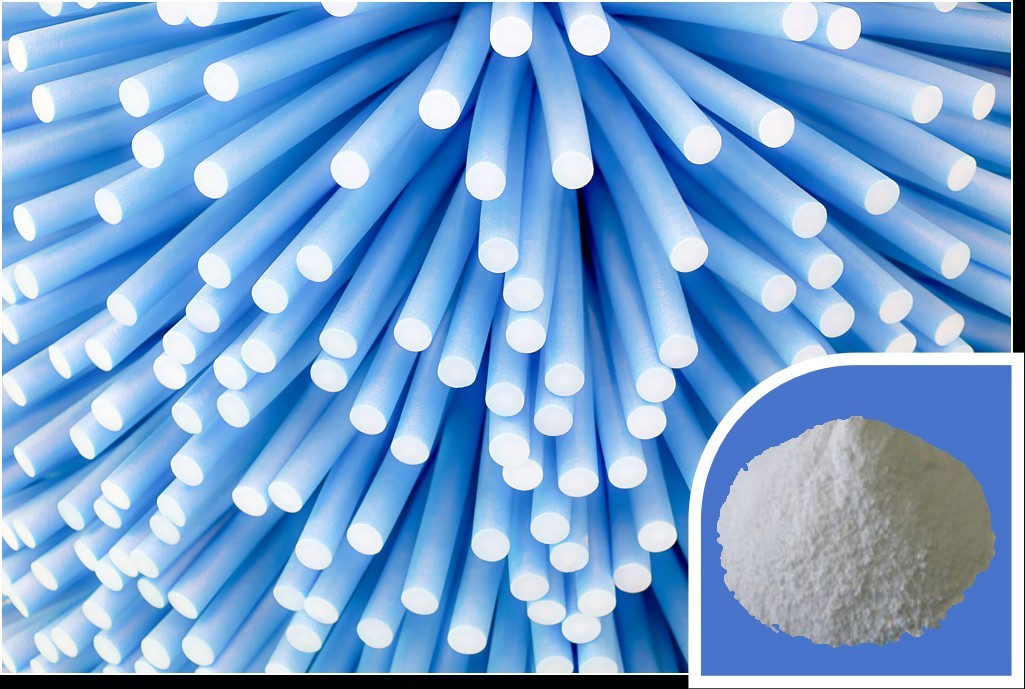
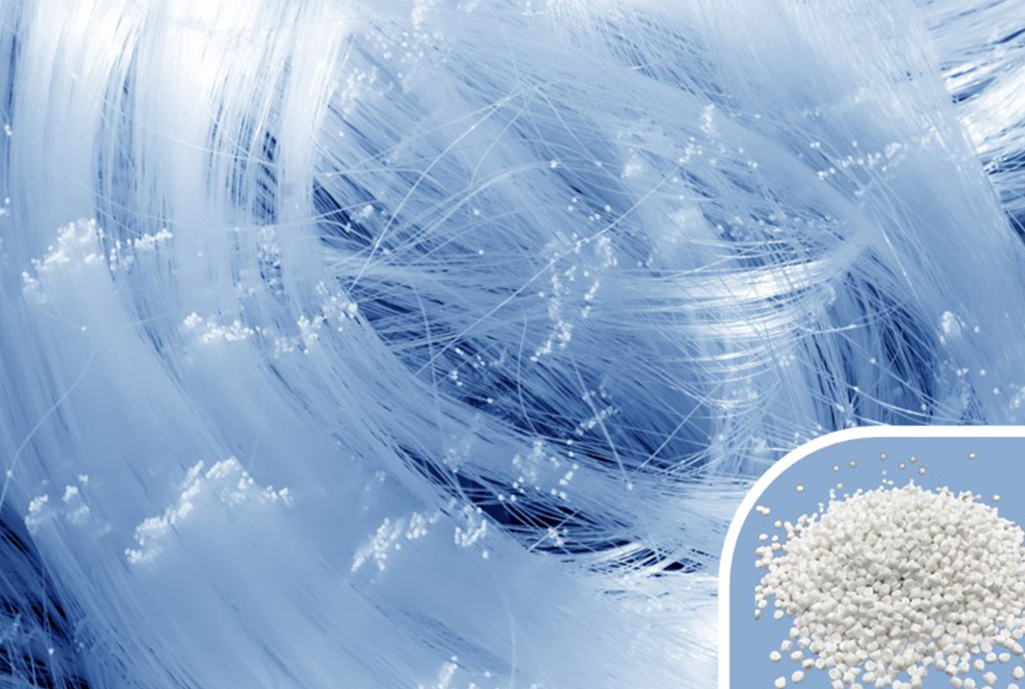
Using flame retardant masterbatch in PP fiber and nonwoven production introduces constraints that don't apply to injection molding or profile extrusion. Fiber spinning is extremely sensitive to additive particle size, melt viscosity changes, and any chemistry that disrupts the continuous drawing process. Standard IFR masterbatches designed for injection molding are often not suitable for fiber applications — their particle size is too large, their high loading requirements increase melt viscosity beyond the spinnable range, and the mineral content can cause filament breaks during drawing.
The preferred approach for PP fiber FR masterbatch uses phosphinate and melamine cyanurate (MC) combinations at total FR loadings of 6–15% — low enough to maintain fiber drawability while achieving meaningful fire performance. This approach has demonstrated LOI values above 28% and pass ratings under DIN 4102-1 (B classification) and FMVSS 302 (automotive interior burn test) at practical loading levels. The key processing requirement is that the FR masterbatch must be produced with very fine particle size distribution — ideally sub-5 micron primary particle size for the phosphinate component — to avoid fiber breakage at the spinneret and maintain filament tensile strength. When specifying FR masterbatch for a PP fiber or nonwoven line, always request particle size distribution data and confirm the product has been tested in a melt spinning environment, not just in injection molding.
Where Flame Retardant Masterbatch for PP Is Used — Industry by Industry
The application landscape for FR-modified polypropylene is broad, but each industry segment has distinct performance priorities that influence which masterbatch system makes the most sense.
Electrical and Electronics
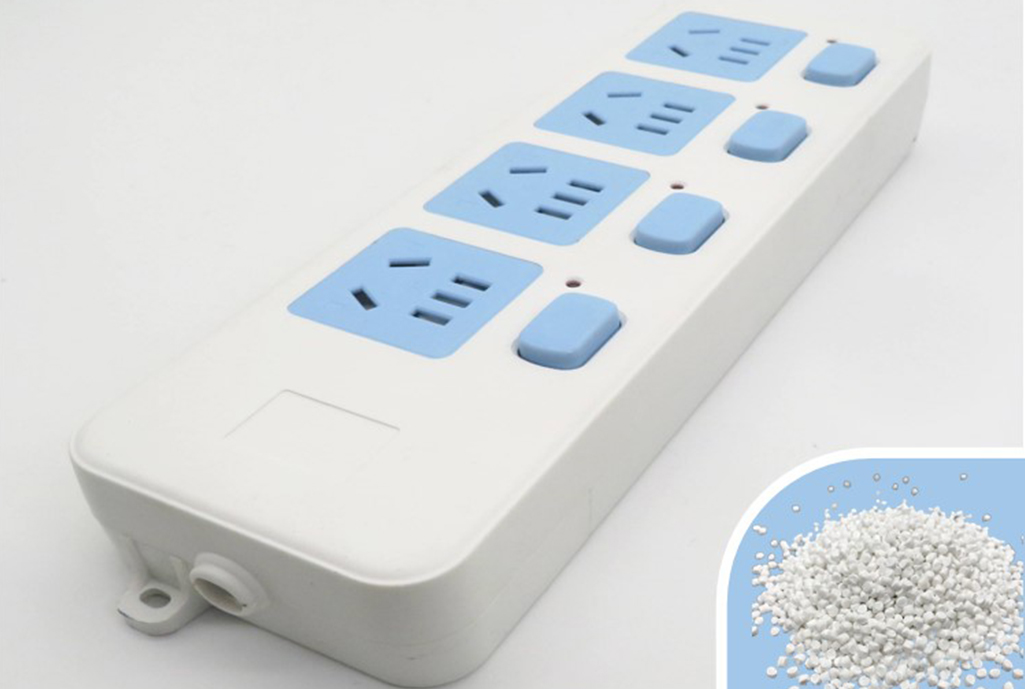
Junction boxes, cable management systems, outlet housings, and appliance components made from PP need V-2 or V-0 ratings and, increasingly, Glow Wire Ignition Temperature (GWIT) compliance — typically 750°C for consumer electronics. Brominated masterbatches have historically dominated this segment, but halogen-free demand is growing fast among Tier 1 electronics brands. P/N synergistic masterbatches and IFR systems that can meet GWIT 750°C alongside V-0 UL 94 are the primary halogen-free alternatives being evaluated for connector and enclosure applications.
Automotive
Interior trim, underhood components, battery covers (particularly for EV platforms), and wire conduit in vehicles are primary PP FR applications. Automotive OEM specifications often reference FMVSS 302 (a horizontal burn test with a 102 mm/min burn rate limit) alongside UL 94, and increasingly require halogen-free materials across all interior plastics to reduce toxic gas emissions in a vehicle fire. IFR and P/N-based FR masterbatches for PP impact copolymers are the preferred direction for automotive compounders targeting both fire safety and sustainability compliance.
Construction and Building Materials
PP roofing membranes, pipe insulation, wall panel facings, and nonwoven geotextiles require fire classification under EN 13501 (Europe) or ASTM E84 (North America). These standards assess flame spread index and smoke developed index, not just the UL 94 vertical burn behavior — which means IFR systems that generate low smoke and limited flame spread are strongly preferred over halogenated grades that perform well in UL 94 but generate corrosive, toxic gases under real fire conditions.
Packaging
Flame retardant PP is used in corrugated sheets, storage containers, and transit packaging for electronics and hazardous goods where fire safety regulations or customer specifications apply. This is a cost-sensitive segment where modest V-2 performance at low let-down ratios (2–5%) is usually sufficient, making low-loading brominated or P/N masterbatches the practical choice.
Processing Parameters That Determine Whether Your FR Masterbatch Works
FR masterbatch for PP is less forgiving of process variation than standard color or UV masterbatches. The narrow processing temperature window, the high sensitivity of IFR chemistry to shear and heat history, and PP's tendency to degrade under oxidative conditions all require closer attention to process settings.
Temperature Profile
For IFR-based compounds, keep all barrel zones below 230°C and the die below 220°C. A useful check: if you smell ammonia at the die, MCA or APP is decomposing prematurely in the barrel — reduce temperatures by 10–15°C and check for dead zones where material is dwelling too long. For brominated masterbatches, the ceiling is slightly higher (up to 250°C) but corrosive HBr can damage equipment if temperature excursions occur, so maintaining consistent zone control is still important.
Screw Speed and Residence Time
High shear is beneficial for breaking down masterbatch agglomerates and achieving uniform FR distribution. However, excessive residence time at temperature degrades both PP and FR actives. The practical target for twin-screw compounding of FR-PP compounds is a barrel fill level that provides complete mixing without extended dwell — monitor melt pressure consistency as a proxy for mixing quality. If melt pressure fluctuates, dispersion is uneven and FR performance will be inconsistent from shot to shot.
Masterbatch Pre-Drying
PP itself is not hygroscopic, but many FR masterbatch carrier systems — especially those using IFR chemistry with mineral components — absorb moisture during storage. Moisture in the barrel causes steam pockets, surface defects, and in the worst case interferes with the acid-carbon-gas sequence that makes IFR chemistry work. Pre-dry FR masterbatch at 80°C for 2–4 hours in a dehumidifying dryer before processing, and keep bag inventories in sealed, climate-controlled storage between production runs.
Matching Compliance Requirements to the Right FR System
Regulatory and customer compliance requirements are often the starting point — not the endpoint — of FR masterbatch selection for PP. The table below maps the most common compliance requirements to the FR system most likely to satisfy them:
|
Compliance requirements and corresponding FR masterbatch direction for PP |
||
|
Compliance Requirement |
Applies To |
Suitable FR System for PP |
|
UL 94 V-2 at low cost |
Consumer electronics, packaging |
Brominated (Br+P) masterbatch at 2–5% loading |
|
UL 94 V-0, halogen allowed |
Standard E&E, industrial |
DBDPE+ATO masterbatch at 5–12% loading |
|
UL 94 V-0, halogen-free |
Green-spec OEM programs, EU E&E |
IFR or P/N masterbatch at 20–30% loading + PTFE |
|
RoHS + REACH compliant |
EU market, most electronics |
Halogen-free IFR or P/N; verify SVHC status of specific compounds |
|
FMVSS 302 (automotive interior) |
Automotive trim, headliners |
P/N or IFR in PP impact copolymer; confirm burn rate ≤102 mm/min |
|
EN 13501 Class E or D (construction) |
Building panels, membranes |
IFR systems with low smoke and limited flame spread; cone calorimeter testing recommended |
|
Low smoke / LSZH |
Tunnels, cable, public buildings |
MDH or ATH mineral masterbatch at 45–65% loading |
One important caveat: compliance documentation must cover the complete compounded formulation, not just the masterbatch in isolation. A masterbatch supplier may provide a RoHS declaration for their product, but if you add colorants, processing aids, or other additives that introduce restricted substances, the final compound is non-compliant regardless of the masterbatch's own status. Always verify compliance at the finished compound level with documentation covering all ingredients.

contact details
Address:No. 166, Chenggong Road, Economic Development Zone, Jiashan County, Jiaxing City, Zhejiang Province
TEL: +86-0573-89103923 / +86 182 6841 1181
E-mail: globalmarketing@xusen.com
Product
News Center