


 English
 عربى
 简体中文

 +86-0573-89103923 / +86 182 6841 1181
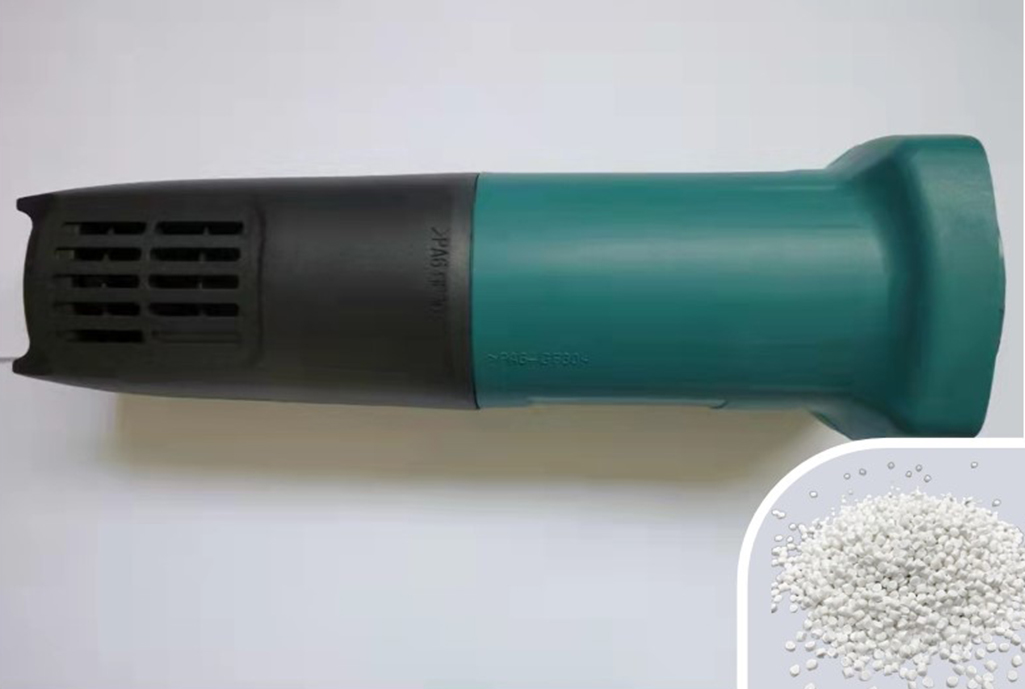
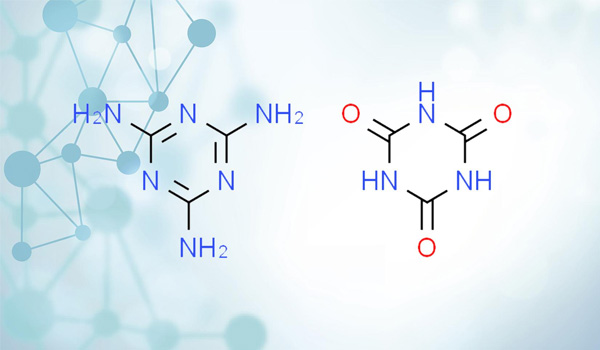
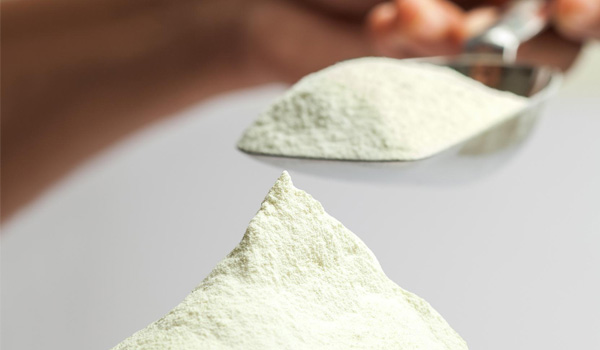

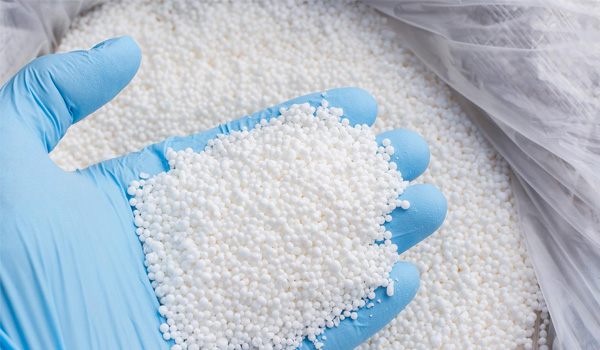
Zhejiang Xusen Flame Retardants Incorporated Company is a halogen-free flame retardant and functional additives masterbatch manufacturer in China. We supply concentrated pellet additives that carry a defined active — thermal stabilization, flow modification, nucleation, anti-dripping or flame retardancy — in a carrier resin matched to the customer's base polymer. Two production bases in Jiashan, Zhejiang and Juancheng, Shandong support an annual capacity of 12,000 tons, and the masterbatch range rests on more than 20 years of work in halogen-free flame retardant chemistry.
This category covers the masterbatch-form products we produce for compounding and injection molding lines: the XS-AR-M3015 thermal stabilizer masterbatch for PA and the XS-RL-M3320 flowability modifier masterbatch for PA, together with the adjacent masterbatch and functional additive grades we run for PP, PBT/PET and polyolefin systems. Each grade is defined by carrier, active content, volatile level and recommended let-down, so it can enter an existing formulation without re-engineering the whole compound.
Where a Functional Additives Masterbatch Earns Its Place
A masterbatch is a pellet in which the active is pre-dispersed in a carrier resin at a fixed concentration. For a compounder or molder, that changes three things on the line: the additive arrives dust-free, it can be dosed gravimetrically at the feed throat, and part of the dispersion work is already done before the material reaches the screw.
- Thermal stabilization — protects nylon against thermal-oxidative aging and yellowing through high-temperature processing and long service exposure.
- Flow modification — raises melt index and processing flowability in PA systems while leaving thermal and mechanical properties largely intact.
- Nucleation — controls crystallization in PP, which feeds directly into cycle time, shrinkage and stiffness.
- Anti-dripping and flame retardancy in masterbatch form — composite flame retardant masterbatch and ATO masterbatch for PBT/PET, and V2 flame retardant masterbatch for PP.
Product Range and Application Fit
The grades below share the same manufacturing route — synthesis, surface treatment, composite formulation and masterbatch compounding — and are matched to the polymer system rather than sold as a single universal additive.
| Grade | Function carried | Carrier | Typical addition | Application fit |
|---|---|---|---|---|
| XS-AR-M3015 thermal stabilizer masterbatch for PA | Thermal-oxidative aging and yellowing resistance | PA6 | 2–4% | Nylon parts that must hold color and mechanical properties through high-temperature aging |
| XS-RL-M3320 flowability modifier masterbatch for PA | Melt index and processing flowability | PA6 | 1–3%, at the granulation stage | Toughened, glass-reinforced and mineral-filled PA and PA66 compounds |
| XS-FR-M1680 ATO masterbatch for PBT | Antimony trioxide delivery | PBT | Per grade | Synergist feed for PBT/PET flame retardant systems |
| XS-FR-M1380 / M1950 composite flame retardant masterbatch for PBT/PET | Composite flame retardancy | PBT / PET | Per grade | Electrical and electronic polyester parts |
| V2 flame retardant masterbatch for PP | Flame retardancy to V2 | PP | Per grade | Injection-molded PP parts with a V2 requirement |
| functional additives for PP — XS-CH-401 / XS-CH-402 nucleating agent | Crystallization control | PP | Per grade | Cycle time, shrinkage and dimensional stability in PP molding |
Carrier Resin, Let-Down and Compatibility
The carrier decides how the masterbatch behaves at the feed throat. Our PA grades use a PA6 carrier so the additive enters the melt in the same phase as the base polymer, which avoids unmelted gel particles and keeps dispersion uniform across the batch.
- Carrier match — PA6-carried grades for PA6 and PA66 compounds; other carriers are formulated where the polymer system requires it.
- Let-down — 2–4% for XS-AR-M3015 and 1–3% for XS-RL-M3320, confirmed against the target property rather than the datasheet midpoint alone.
- Color interaction — XS-AR-M3015 reacts with antimony-containing compounds, so light-colored parts need a different stabilization route.
- Volatile level — both grades are specified at ≤0.3, which matters on vented extrusion lines and for parts with strict surface requirements.
- Form — white, free-flowing particles suited to gravimetric dosing.
Critical Specifications We Fix Before Production
| Parameter | XS-AR-M3015 | XS-RL-M3320 |
|---|---|---|
| Appearance | White particles | White particles |
| Effective content | ≥15 | 20 ± 1 |
| Volatile | ≤ 0.3 | ≤ 0.3 |
| Carrier | PA6 | PA6 |
| Recommended addition | 2–4% | 1–3%, granulation stage of a twin-screw extruder |
| Known constraint | Coloring reaction with antimony-containing compounds; not for light-colored products | Little effect on thermal and mechanical properties of the host material |
Process and Line Integration
We configure the grade around the line rather than the other way round. Feeding position, screw profile, drying practice and downstream pressure all influence how much of the active survives to the finished part.
- Dosing — gravimetric feeding at the main throat, or a downstream side feeder where the active is heat-sensitive.
- Screw configuration — moderate shear with adequate mixing elements; excessive melt temperature in the metering zone works against stabilization.
- Drying — PA carriers are hygroscopic, so the masterbatch is dried with the base resin to hold the volatile level down.
- Let-down control — for critical properties we recommend weighing the masterbatch separately instead of pre-blending.
- Line trials — we support a first trial with a starting let-down and a sampling plan for the properties that matter to the part.
Quality Assurance and Acceptance Testing
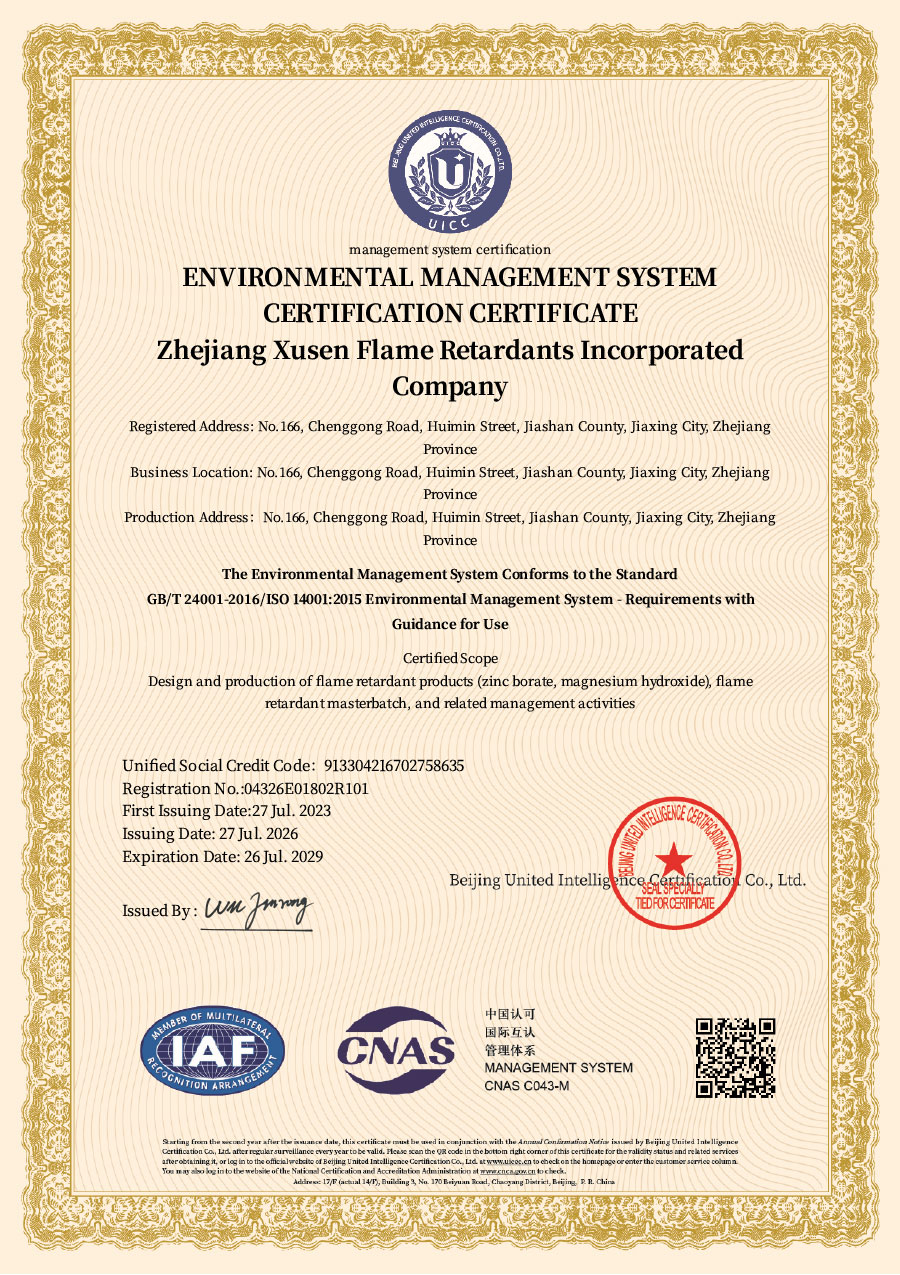
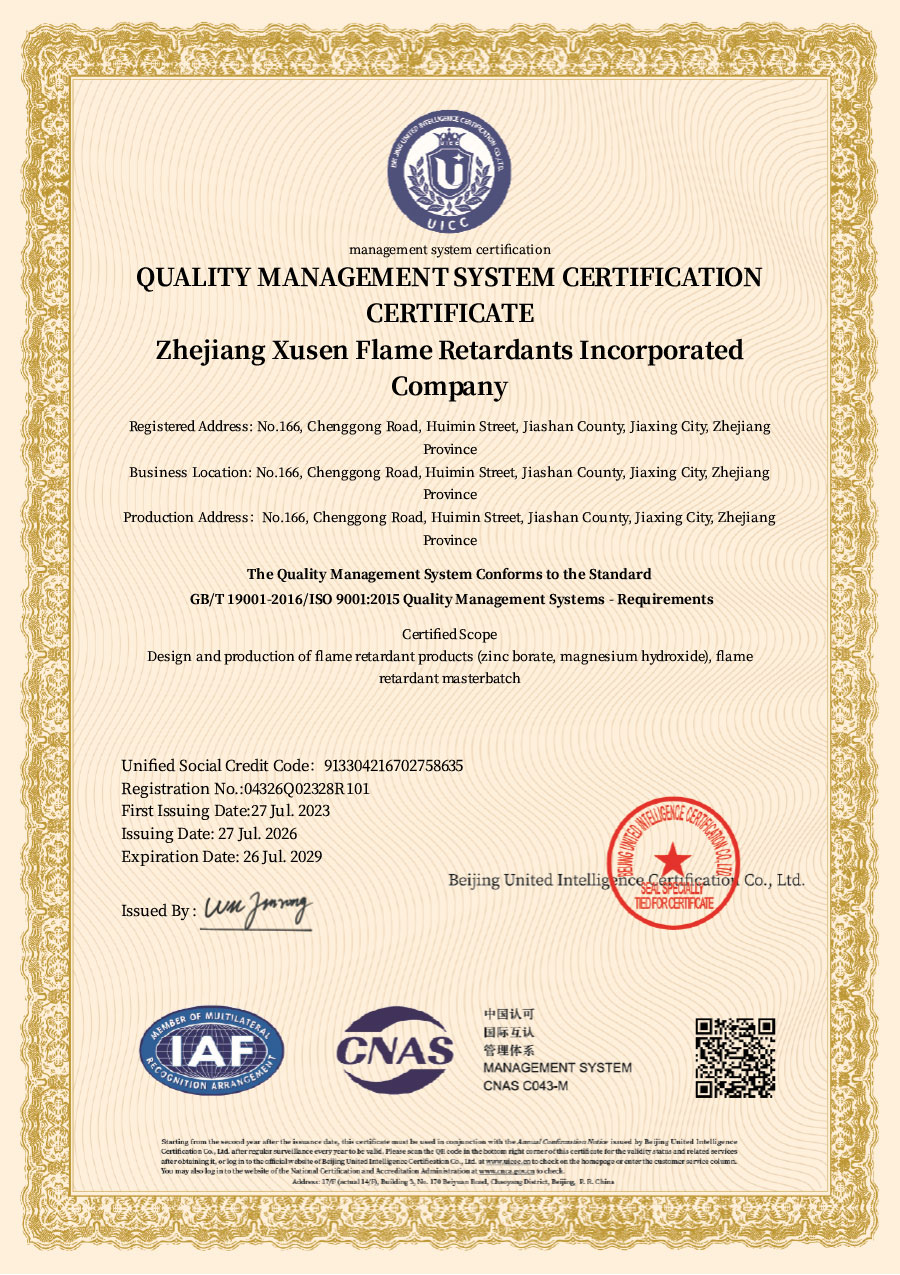
Production runs under an ISO9001-2015 quality management system, in our own workshops and warehouses with complete production and quality inspection equipment. Every step of the product formation process is managed against that system, from raw material intake to final packing.
- Incoming raw material control and batch traceability through the two production bases.
- In-process checks on appearance, effective content and volatile level.
- A batch certificate of analysis stating the tested values for the delivered lot.
- Retention samples held for comparison against later deliveries.
- Third-party RoHS and halogen test reports maintained across the product families.
Compliance Evidence
Our products comply with the requirements of the WEEE, RoHS and EUP directives, and our MCA and APP grades are REACH registered. RoHS test reports are held for APP, ATH, flame retardant for PA and flame retardant for polyolefin, alongside a halogen test report and a RoHS 3.0 report for MCA.
- RoHS test reports issued by product family, not by a single reference grade.
- Halogen test report for MCA where halogen-free status must be evidenced.
- REACH registration for MCA and APP grades.
- Batch certificate of analysis and the applicable test reports supplied with the order documentation.
Customization, Packaging and Delivery Scope
We formulate against a specified carrier, active content and let-down, and we run OEM production for customers who need the masterbatch under their own designation. Trial quantities are produced ahead of full-scale runs so the grade can be qualified on the actual line.
- Custom carrier, active content and let-down agreed at the quotation stage.
- Trial batch for line qualification, followed by production quantities from either base.
- Packaging and pallet configuration confirmed at order so bag size, liner and labelling match the receiving line.
- Delivery scope covers the masterbatch itself, with technical support through the first production run.
Information We Use to Configure Your Solution
A workable recommendation depends on the working point, the material and the production target. The inputs below are what we ask for before issuing a configuration and quotation for a Functional additives masterbatch manufacturer supply programme.
| Project input | What it determines |
|---|---|
| Base polymer and grade (PA6, PA66, PP, PBT, PET) | Carrier selection and compatibility with the host melt |
| Target property and test method | Active content and recommended let-down |
| Current formulation and additives already in use | Avoids double dosing and additive antagonism |
| Process route and equipment (compounding or molding, screw diameter, L/D) | Addition point and shear exposure of the active |
| Color and surface requirements | Flags interactions such as the antimony reaction with XS-AR-M3015 |
| Target output, annual volume and compliance requirements | Batch size, packaging, delivery schedule and the test reports issued with the lot |
Frequently Asked Questions
What is a functional additives masterbatch, and how does it differ from a single-substance additive?
A single-substance additive is the active chemistry on its own — MCA, APP, ATH or an organophosphorus product. A functional additives masterbatch is that active pre-dispersed in a carrier resin at a fixed concentration, delivered as free-flowing pellets. The masterbatch form removes dust handling, allows accurate gravimetric dosing and shortens the dispersion path inside the extruder.
Which carrier resin do you use, and can you supply a different one?
Our PA masterbatches, including XS-AR-M3015 and XS-RL-M3320, use a PA6 carrier so the additive enters the melt in the same phase as the base polymer. Where a project runs on a different polymer system, we formulate the carrier to suit it and confirm the choice against the processing temperature and compatibility requirements of the compound.
What let-down do you recommend for XS-AR-M3015 and XS-RL-M3320?
XS-AR-M3015 is recommended at 2–4% for thermal-oxidative aging and yellowing resistance in nylon. XS-RL-M3320 is recommended at 1–3%, added during the granulation stage of a twin-screw extruder, to raise melt index and processing flowability in PA and PA66 systems. Both figures are starting points that we confirm against the target property and the line configuration.
Can XS-AR-M3015 be used in light-colored nylon parts?
No. XS-AR-M3015 has a coloring reaction with antimony-containing compounds, so it cannot be mixed into light-colored products. For those applications we select a different stabilization route and confirm the color requirement before the formulation is fixed.
What compliance documentation accompanies an order?
Products comply with the WEEE, RoHS and EUP directives, and MCA and APP grades are REACH registered. Depending on the grade, we issue the batch certificate of analysis together with the applicable RoHS test report, and a halogen test report where halogen-free status has to be evidenced.
What do you need from us to prepare a configuration and quotation?
We need the base polymer and grade, the target property with its test method, the current formulation and any additives already present, the process route and screw details, color and surface requirements, the expected annual volume, and the compliance standards the finished part must meet. With those inputs we set the carrier, active content and let-down, and quote against a defined trial batch.