Tel: +86-0573-89103923 / +86 182 6841 1181

E-mail:globalmarketing@xusen.com



 English
 عربى
 简体中文
Single Substance Flame Retardants Explained: How to Pick the Right One Without the Guesswork
2026-10-26
Content
- 1 What Are Single Substance Flame Retardants?
- 2 How Single Substance Flame Retardants Stop a Fire
- 3 Common Single Substance Flame Retardants at a Glance
- 4 Single Substance vs. Compounded Flame Retardants
- 5 How to Choose the Right Single Flame Retardant for Your Material
- 6 Practical Tips for Using Single Substance Flame Retardants
- 7 Safety, Environmental, and Regulatory Points to Check
- 8 Quick Selection Guide by Application
- 9 Final Thoughts on Using Single Substance Flame Retardants
What Are Single Substance Flame Retardants?
Single substance flame retardants are flame retardant additives made of one chemical compound, such as aluminum hydroxide, magnesium hydroxide, ammonium polyphosphate, or melamine cyanurate. They are sometimes called single-component flame retardants or single flame retardants. They are different from compounded (blended) systems, where several flame retardants, synergists, and processing aids are pre-mixed into one product.
Because a single substance flame retardant has one defined chemistry, you know exactly what you are adding to your formula. The decomposition temperature, flame retardant mechanism, particle size, and typical loading are all easy to look up and test. That makes these materials a practical starting point for engineers, compounders, and formulators who want predictable results and easy troubleshooting.
The trade-off is that a single substance works through one main mechanism. A single flame retardant may be excellent at cooling a burning polymer but weak at forming a protective char, or the reverse. Knowing this limit is the key to using these products well.
How Single Substance Flame Retardants Stop a Fire
Almost every flame retardant works by interrupting the fire triangle of heat, fuel, and oxygen. Single-component flame retardants usually rely on one of the mechanisms below.
Cooling and dilution (endothermic decomposition)
Metal hydroxides such as aluminum hydroxide (ATH) and magnesium hydroxide (MDH) break down when heated. They absorb heat and release water vapor. The heat absorption cools the material, and the water vapor dilutes the flammable gases around the flame. ATH releases roughly one third of its weight as water, and MDH releases a little less than that.
Char formation (condensed phase action)
Phosphorus-based products such as ammonium polyphosphate (APP) and red phosphorus encourage the polymer to form a carbon-rich char layer. This layer insulates the material underneath and slows the release of fuel gases.
Gas phase radical trapping
Some phosphate esters and brominated compounds release active species into the flame that capture the highly reactive radicals that keep combustion going. This lowers flame intensity quickly, even at modest loadings.
Gas release and dilution
Nitrogen-based flame retardants such as melamine and melamine cyanurate sublimate and decompose, releasing non-flammable gases like nitrogen and ammonia. These dilute the fuel and also help carry heat and drips away from the flame zone.
Common Single Substance Flame Retardants at a Glance
The table below compares the single substance flame retardants most often used in plastics, rubber, wire and cable, and coatings. The numbers are typical ranges. Actual values depend on grade, particle size, and the base polymer, so always check the supplier's data sheet.
| Flame Retardant | Main Mechanism | Decomposition / Active Range | Typical Loading | Common Uses |
| Aluminum hydroxide (ATH) | Endothermic cooling, water release | About 200°C | 40% to 65% | Cables, rubber, epoxy, PVC, polyester |
| Magnesium hydroxide (MDH) | Endothermic cooling, water release | About 330°C | 40% to 65% | PP, PE, EVA, polyamide, halogen-free cables |
| Ammonium polyphosphate (APP) | Char formation, acid source | Above 250°C | 15% to 30% | Intumescent coatings, PP, PU foam |
| Melamine cyanurate (MCA) | Gas dilution, heat absorption | Around 320°C to 350°C | 6% to 12% | PA6, PA66, TPU |
| Red phosphorus | Char formation, gas phase action | Above 300°C | 5% to 10% | Glass-filled polyamide, epoxy molding compounds |
| Bisphenol A bis(diphenyl phosphate) (BDP) | Gas phase and char action | Stable to about 300°C | 10% to 20% | PC/ABS, PPO blends |
| DOPO | Gas phase and char action | Reactive, built into the polymer | Varies by system | Epoxy resins, circuit board laminates |
Single Substance vs. Compounded Flame Retardants
Many people ask whether they should buy a single substance flame retardant or a ready-made compound system. The answer depends on how demanding your fire rating is and how much control you want over the formula.
When a single substance flame retardant is the better choice
- You need a clear, traceable formula for regulatory or customer audits.
- Your target rating is moderate, such as UL 94 V-2 or a basic limiting oxygen index improvement.
- You want to adjust the loading in small steps and measure the effect of each change.
- You are developing a new formula and want to isolate how one ingredient affects mechanical and electrical properties.
When a compounded system may work better
- You need a strict rating such as UL 94 V-0 at thin wall sections, where two or three actions must work together.
- You want to reduce total loading so the part keeps its impact strength and flow.
- You prefer a pre-tested package with consistent dispersion, to save time on formulation trials.
In practice, many factories start with a single substance flame retardant to learn how their polymer responds, then add a synergist, such as zinc borate with ATH, or melamine with APP, only if the test result demands it.
How to Choose the Right Single Flame Retardant for Your Material
Picking a single substance flame retardant is mostly a matching exercise. The flame retardant has to survive processing, work at the temperature where your polymer burns, and leave the final properties acceptable.
Match the processing temperature
This is the most common reason a flame retardant fails. ATH begins to lose water at around 200°C, so it works well in PVC, EVA, and rubber but is unsuitable for engineering plastics processed at 260°C or higher, because it would foam and create voids. MDH tolerates much higher temperatures, which is why it is used in polypropylene and some polyamides.
Match the polymer chemistry
Melamine cyanurate suits polyamides because the polymer's chemistry works with the additive's decomposition. Phosphate esters such as BDP are very effective in oxygen-containing polymers like polycarbonate blends, which tend to char. Polyolefins such as polypropylene often need a high loading of mineral fillers or an intumescent phosphorus system.
Check the target standard
- UL 94 (V-0, V-1, V-2, HB) for appliances, electronics, and plastic housings.
- IEC 60332 and low smoke zero halogen requirements for cables.
- EN 13501 or ASTM E84 for building materials and coatings.
- Glow wire tests (GWIT/GWFI) for electrical components.
Consider the property trade-offs
High-loading mineral fillers like ATH and MDH make materials stiffer and heavier, and they can reduce elongation and flow. Phosphorus-based additives may absorb moisture or lower heat distortion temperature. Always test tensile strength, impact resistance, and electrical insulation after adding the flame retardant, not just the fire rating.
Practical Tips for Using Single Substance Flame Retardants
Even the right flame retardant can underperform if it is handled badly. These steps are simple but make a real difference in production.
- Choose the right particle size. Finer grades of ATH or MDH disperse more evenly and give better mechanical properties, but they can raise viscosity.
- Use surface-treated grades. Coupling agents such as silane or stearate coatings improve compatibility with polymers and reduce water uptake.
- Dry the additive and the polymer. Moisture in hygroscopic flame retardants can cause bubbles, silver streaks, or hydrolysis in polyamides and polyesters.
- Increase loading in steps. Test at three levels, such as low, medium, and high, and plot the fire rating against loading to find the point where adding more stops helping.
- Control mixing conditions. Poor dispersion creates weak spots where flames can spread, even when the average loading seems correct.
- Test on the final part geometry. Thin walls burn differently from thick test bars, so confirm the rating at the thinnest section you will produce.
Safety, Environmental, and Regulatory Points to Check
Regulation of flame retardants has changed significantly over the past two decades. Several brominated and chlorinated compounds, such as certain polybrominated diphenyl ethers, are restricted or banned in many regions. This is a major reason halogen-free single substance flame retardants like ATH, MDH, APP, and melamine-based products are widely used.
Before you finalize a formula, review the regulations that apply to your market and product type. Common checkpoints include REACH and RoHS in the European Union, TSCA in the United States, and any customer-specific restricted substance lists. Also request safety data sheets and, where relevant, food contact, toxicity, or smoke density test data from your supplier. Smoke and toxic gas generation often matter as much as flame spread, especially in public transport, buildings, and cables.
Quick Selection Guide by Application
If you want a fast starting point, use the table below to narrow the options. It is a first screening tool, and final selection should always be confirmed by lab testing.
| Application | Base Material | Suggested Single Flame Retardant | Key Point |
| Halogen-free cable sheath | EVA, polyethylene | ATH or MDH | High loading, good smoke suppression |
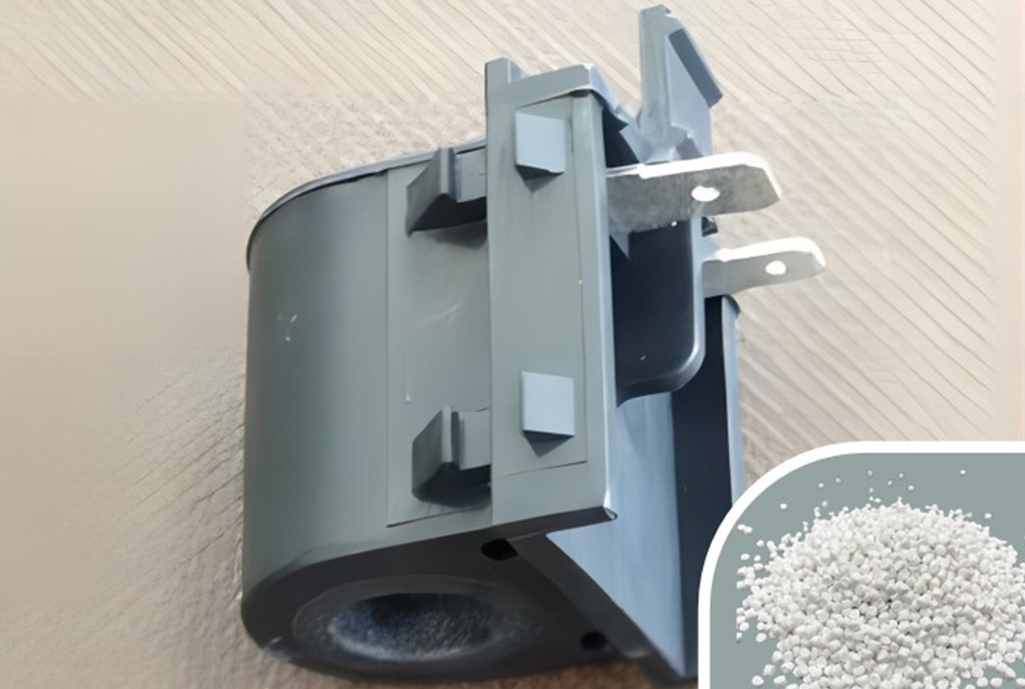
| Electrical connectors | PA6, PA66 | Melamine cyanurate or red phosphorus | Good V-0 performance, check color limits for red phosphorus |
| Laptop and device housings | PC/ABS | BDP | Check heat resistance and migration |
| Steel structure coating | Water- or solvent-based paint | APP in an intumescent system | Needs a carbon source and gas source in the formula |
| Circuit board laminate | Epoxy resin | DOPO (reactive) | Bonds into the polymer, so less leaching |
| Rubber conveyor belt | SBR, NBR, PVC | ATH | Keep processing below its decomposition temperature |
Final Thoughts on Using Single Substance Flame Retardants
Single substance flame retardants give you clarity, control, and simple troubleshooting. They are an excellent choice when your fire requirement is moderate, when you want a clean halogen-free formula, or when you are still learning how your polymer behaves under fire. Start by matching the flame retardant's decomposition temperature to your processing window, then confirm the mechanism suits your polymer, and finally verify the result against the real standard you need to pass.
If a single flame retardant cannot reach your target without damaging the material's properties, that is the signal to explore a synergistic combination. Testing the single substance first still gives you a valuable baseline, so every later improvement can be measured against it.


contact details
Address:No. 166, Chenggong Road, Economic Development Zone, Jiashan County, Jiaxing City, Zhejiang Province
TEL: +86-0573-89103923 / +86 182 6841 1181
E-mail: globalmarketing@xusen.com
Product
News Center