Tel: +86-0573-89103923 / +86 182 6841 1181

E-mail:globalmarketing@xusen.com



 English
 عربى
 简体中文
Flame Retardant Masterbatch: How to Pick the Right One and Use It Without Wasting Money
2026-11-06
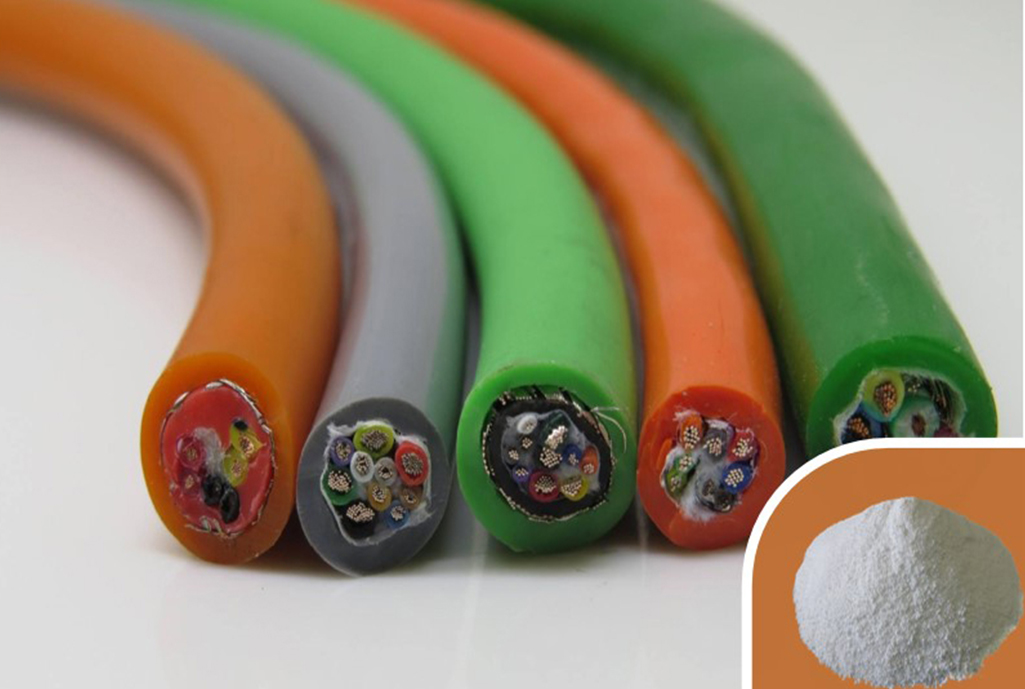
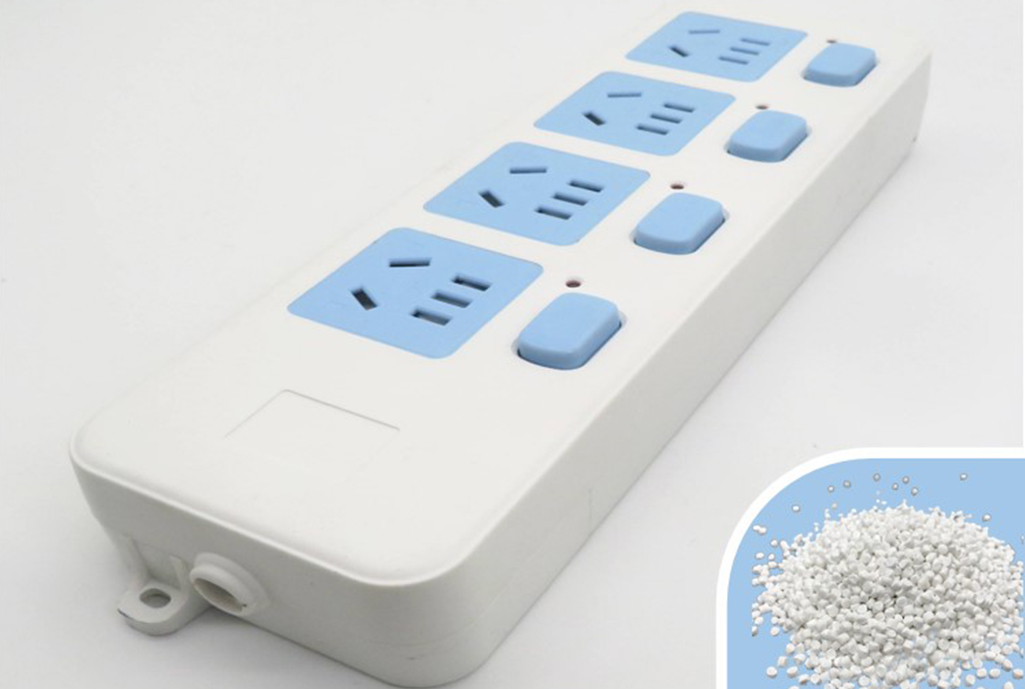
If you make plastic parts for cables, appliances, electronics, building materials or car interiors, you have probably been asked one question by customers: "Is it flame retardant?" Flame retardant masterbatch is the easiest way to give a normal plastic that ability without rebuilding your whole formulation. This guide explains what it is, which types exist, how much to add, and how to avoid the common mistakes that cause failed tests and wasted material.
Content
- 1 What Is Flame Retardant Masterbatch and How Does It Work?
- 2 Main Types of Flame Retardant Masterbatch
- 3 Matching the Masterbatch to Your Base Resin
- 4 How Much Flame Retardant Masterbatch Should You Add?
- 5 Processing Tips for Stable Results
- 6 Common Problems and How to Fix Them
- 7 Standards and Certificates to Ask For
- 8 How to Choose a Reliable Flame Retardant Masterbatch Supplier
- 9 Final Thoughts
What Is Flame Retardant Masterbatch and How Does It Work?
Flame retardant masterbatch (often called FR masterbatch or fire retardant masterbatch) is a concentrated pellet made by mixing flame retardant additives, a carrier resin and processing aids through twin-screw extrusion. You blend these pellets with your base polymer during injection molding, extrusion or film blowing. Because the additive is already evenly dispersed in the pellet, it spreads far better in the final part than if you added loose powder directly to the machine.
Flame retardant additives work in several ways. Some release gases that dilute oxygen around the flame. Others form a charred layer on the surface that blocks heat and stops melted plastic from feeding the fire. Some absorb heat by decomposing endothermically, which cools the material below its ignition point. A good masterbatch uses one or a combination of these mechanisms, depending on the base polymer.
Why use a masterbatch instead of loose powder?
- Cleaner handling, with less dust in the workshop and less loss of material.
- More consistent dispersion, which means more stable flame test results.
- Easy dosing with a standard feeder, so you can adjust the ratio batch by batch.
- Lower inventory complexity, since one masterbatch can serve several product grades.
Main Types of Flame Retardant Masterbatch
Not all flame retardant plastic masterbatch is the same. The chemistry inside decides the cost, the smoke level, the effect on mechanical properties and whether the product meets environmental rules. The table below compares the most common types.
| Type | Typical Active Ingredients | Common Base Resins | Main Advantage | Main Limitation |
| Halogenated (bromine-antimony) | Brominated compounds with antimony trioxide | PP, PS, ABS, PBT, PA | High efficiency at low dosage | More smoke, corrosive gas, tightening regulations |
| Halogen-free phosphorus-nitrogen (intumescent) | Ammonium polyphosphate, melamine derivatives | PP, PE, EVA | Low smoke, environmentally friendly | Higher loading, sensitive to moisture |
| Metal hydroxide | Aluminum hydroxide, magnesium hydroxide | PE, EVA, PVC cables | Very low toxicity and smoke | Needs 50 to 65 percent loading, hurts toughness |
| Phosphinate-based | Aluminum diethyl phosphinate with synergists | PA, PBT, PET | Works in engineering plastics, good electrical properties | Higher cost |
Halogen-free flame retardant masterbatch is the growing choice
Many buyers now ask specifically for halogen-free flame retardant masterbatch because of RoHS, REACH and customer green procurement rules. It produces less toxic smoke during burning, which matters in public buildings, trains, data centers and consumer electronics. The trade-off is higher addition levels and more careful drying and processing, which we cover below.
Matching the Masterbatch to Your Base Resin
The most common reason a flame retardant masterbatch fails is a mismatch between the carrier resin, the additive system and the base polymer. A masterbatch made on a PP carrier will not blend well with polyamide, and an additive that decomposes at 220 degrees Celsius will break down in a resin processed at 260 degrees Celsius. Always check these points before ordering.
Practical pairing guide
- Polypropylene (PP): Intumescent halogen-free masterbatch for appliance housings, or bromine-antimony types where cost is the priority.
- Polyethylene (PE) and EVA: Metal hydroxide or phosphorus-nitrogen masterbatch for cable sheathing, pipes and films.
- ABS and HIPS: Brominated systems are still common for TV backs and electronics; ask for halogen-free options when export rules require it.
- Polyamide (PA6, PA66): Phosphinate or red phosphorus systems that can handle high processing temperatures.
- PBT and PET: Phosphinate-based masterbatch for connectors and switch parts that need glow wire resistance.
How Much Flame Retardant Masterbatch Should You Add?
The dosage depends on the flame retardant rating you need, the wall thickness of the part and the base resin. A thin 0.8 mm part is much harder to pass than a 3 mm part, because there is less material to form a protective char layer. The numbers below are typical starting points, not guarantees; always confirm with your own test samples.
| Base Resin | Target Rating | Typical Masterbatch Addition | Notes |
| PP (halogen-free) | UL94 V-2 to V-0 | 20 to 30 percent | Dry the masterbatch before use |
| PP (bromine-antimony) | UL94 V-0 | 8 to 15 percent | Watch screw corrosion at high temperature |
| PE cable compound | Low smoke, oxygen index above 30 | 40 to 60 percent | Adjust with a compatibilizer |
| ABS | UL94 V-0 | 12 to 20 percent | Impact strength drops, so check notched impact |
| PA6 (glass-filled) | UL94 V-0 at 1.6 mm | 15 to 25 percent | Keep melt temperature controlled |
Run a ladder test before full production
A simple way to avoid overspending is a dosage ladder. Mold test bars at three or four addition levels, for example 15, 20, 25 and 30 percent, then send them for UL94 vertical burning and oxygen index tests. Choose the lowest level that passes with a safety margin. Many factories find that the last 3 to 5 percent of additive adds a lot of cost while only slightly improving results.
Processing Tips for Stable Results
Even a top-quality fire retardant masterbatch can give poor parts if the process is wrong. Most problems come from moisture, overheating and uneven mixing, and all three are easy to control once you know what to watch.
Key settings to check
- Drying: Dry phosphorus-nitrogen and polyamide-based masterbatch for 2 to 4 hours at 80 to 100 degrees Celsius to prevent surface streaks and bubbles.
- Temperature: Keep the melt temperature below the decomposition point of the additive, usually 200 to 230 degrees Celsius for intumescent systems in PP.
- Residence time: Avoid leaving melt in the barrel during stoppages, because long heating can release gas and discolor parts.
- Mixing: Pre-blend pellets in a drum mixer or use a gravimetric dosing unit so the ratio stays accurate through the run.
- Equipment care: For halogenated types, use corrosion-resistant screws and barrels, and purge the machine with a clean resin after production.
Common Problems and How to Fix Them
When a batch fails, work through the likely causes in order instead of simply adding more masterbatch. The table below lists the problems we see most often and the fastest fixes.
| Problem | Likely Cause | Practical Fix |
| Fails UL94 on thin walls | Dosage too low or poor dispersion | Raise addition by 2 to 3 percent or add a synergist |
| Surface silver streaks | Moisture in the pellets | Dry thoroughly and keep the hopper covered |
| Parts turn yellow or brown | Melt temperature too high | Lower barrel temperatures and shorten residence time |
| Brittle parts | High filler loading reducing toughness | Add a toughening agent or switch to a more efficient system |
| White powder on the surface (blooming) | Additive migration or moisture absorption | Use a low-migration grade and store in sealed packaging |
Standards and Certificates to Ask For
A flame retardant additive masterbatch is only useful if the finished part passes the test your customer cares about. Before you place an order, find out which standard applies to your product and ask the supplier for matching test reports on a similar resin and thickness.
- UL94: The most common rating for plastic parts in electronics and appliances (HB, V-2, V-1, V-0, 5VA).
- Glow wire test (IEC 60695): Required for many household appliance and connector parts.
- Limiting oxygen index (ISO 4589): Used widely for cables and construction materials.
- RoHS and REACH compliance: Needed for products sold in Europe and for many global brands.
- Building and transport standards: Such as EN 13501 for construction products and EN 45545 for railway vehicles.
How to Choose a Reliable Flame Retardant Masterbatch Supplier
Price per kilogram is a poor way to compare suppliers. A cheaper masterbatch that needs 30 percent addition costs more than a better one that works at 20 percent. Compare the cost per finished part, and judge the supplier on the following points.
- Ask for samples and test them in your own resin, machine and part design, not just a datasheet.
- Request a certificate of analysis for each batch and check the consistency of melt flow index and additive content.
- Check whether they can customize the carrier resin, color and dosage for your application.
- Confirm technical support is available when you meet processing or testing problems.
- Ask about packaging, such as moisture-proof bags, and about the minimum order quantity and lead time.
Final Thoughts
Choosing the right flame retardant masterbatch comes down to four steps: match the chemistry to your base resin, set the dosage through a ladder test, control drying and temperature during processing, and verify results against the standard your customer requires. Whether you pick a halogen-free flame retardant masterbatch for environmental reasons or a halogenated one for cost, testing on your own production line is the only way to be sure. Start with small trial batches, record your results, and work with a supplier who can adjust the formula to your needs.



contact details
Address:No. 166, Chenggong Road, Economic Development Zone, Jiashan County, Jiaxing City, Zhejiang Province
TEL: +86-0573-89103923 / +86 182 6841 1181
E-mail: globalmarketing@xusen.com
Product
News Center