Tel: +86-0573-89103923 / +86 182 6841 1181

E-mail:globalmarketing@xusen.com



 English
 عربى
عربى 简体中文
简体中文Everything You Need to Know About Flame Retardant Masterbatch for PA
2026-05-26
Content
- 1 Why Standard Polyamide Burns — and What the Masterbatch Format Solves
- 2 How Flame Retardant Masterbatch for PA Actually Works
- 3 The Main Types of Flame Retardant Masterbatch for PA
- 4 Key Performance Standards: What Ratings to Target and Why
- 5 Processing Tips for Using FR Masterbatch in PA
- 6 Application Areas Where FR Masterbatch for PA Is Most Critical
- 7 Halogen-Free FR Masterbatch for PA: The Regulatory Shift You Need to Know
- 8 Selecting the Right FR Masterbatch for Your PA Grade
Why Standard Polyamide Burns — and What the Masterbatch Format Solves
Polyamide — widely known as nylon — is one of the most popular engineering plastics on the market. PA6 and PA66 deliver impressive tensile strength, heat resistance, and chemical stability, which is why they show up everywhere from automotive connectors to circuit breaker housings. The problem is that standard polyamide ignites relatively easily and, once burning, sustains a flame. Its carbon-rich molecular backbone provides ready fuel, making unmodified PA a liability in any application where fire safety matters.
The most reliable way to fix this is to introduce flame-retardant (FR) chemistry into the PA matrix during processing. Historically, manufacturers added raw FR powder directly to the resin blend. The results were inconsistent: uneven dispersion caused "hot spots" of FR concentration, dusty powders created health and housekeeping issues, and weighing accuracy was hard to maintain on a production line. Flame Retardant Masterbatch for PA was developed specifically to eliminate these headaches. By pre-dispersing high concentrations of FR actives into a PA-compatible carrier resin and pelletizing the mixture, suppliers deliver a dust-free, free-flowing granule that meters and blends exactly like standard resin pellets — with none of the powder handling problems.
How Flame Retardant Masterbatch for PA Actually Works
The flame-retardant effect is not a single mechanism — it's a combination of physical and chemical interventions that collectively interrupt the combustion cycle. Understanding these mechanisms helps you choose the right FR chemistry for your specific PA application.
Gas-Phase Interruption
Halogenated flame retardants (brominated or chlorinated) release hydrogen halide gases when the polymer heats up. These gases scavenge the highly reactive free radicals — primarily H• and OH• — that propagate the combustion chain reaction in the gas phase above the melt. Without these radicals, the flame literally runs out of fuel and self-extinguishes.
Condensed-Phase Char Formation
Phosphorus-based FR systems, whether organic or inorganic, promote the formation of a carbonaceous char layer on the polymer surface during burning. This char acts as a physical barrier: it insulates the underlying material from heat, cuts off the oxygen supply, and blocks the release of combustible volatile gases. For PA applications requiring V-0 performance without halogens, phosphorus systems are the preferred route.
Endothermic Cooling and Gas Dilution
Nitrogen-based systems — melamine cyanurate (MCA) being the most widely used for polyamide — work mainly through gas-phase dilution. When heated, MCA decomposes endothermically, absorbing thermal energy while releasing large volumes of inert gases (nitrogen, CO₂, water vapor). These non-combustible gases dilute oxygen and fuel vapors in the flame zone, reducing the fire's intensity. This mechanism is particularly clean and is why nitrogen-based FR masterbatches are popular in halogen-free nylon formulations.
The Main Types of Flame Retardant Masterbatch for PA
Not all FR masterbatches are interchangeable. The chemistry, loading level, and processing requirements differ significantly between types. The table below summarizes the most common options used in polyamide applications:
|
Comparison of common FR masterbatch types for PA6/PA66 |
||||
|
FR Type |
Active Chemistry |
Typical Loading in PA |
Max UL 94 Rating |
Halogen-Free? |
|
Brominated |
Brominated compounds + antimony trioxide |
8–15% |
V-0 |
No |
|
Phosphorus-based |
Organic / inorganic phosphorus esters |
10–25% |
V-0 |
Yes |
|
Nitrogen-based (MCA) |
Melamine cyanurate |
6–20% |
V-2 to V-0* |
Yes |
|
P/N Synergistic |
Phosphorus + nitrogen combined |
8–18% |
V-0 |
Yes |
*Achieving V-0 with MCA alone in PA typically requires higher loadings and is formulation-dependent. Combined P/N systems deliver superior V-0 performance at lower total additive levels.
Brominated Masterbatches
Brominated FR masterbatches remain the most cost-efficient route to UL 94 V-0 in standard PA6 and PA66 compounds. They work at relatively low loading levels (8–15% by weight), minimizing dilution of the base polymer's mechanical properties. The tradeoff is environmental: bromine-based systems are not recyclable-friendly, may release corrosive gases during processing at high temperatures, and face increasing regulatory scrutiny in certain markets, particularly Europe. Always confirm that the specific brominated compound complies with RoHS and REACH where applicable.
Halogen-Free Phosphorus and Nitrogen Systems
The shift toward halogen-free flame retardant masterbatch for PA has accelerated in recent years, driven by end-user sustainability requirements and evolving regulations. Phosphorus-based systems are particularly effective in PA66 used for E&E connectors and automotive parts that operate at elevated temperatures. Nitrogen-based MCA masterbatches are a go-to solution for PA6 textile fibers, bobbin applications, and corrugated pipes where good mechanical properties must be preserved alongside fire safety. P/N synergistic systems combine both mechanisms for improved efficiency — achieving V-0 at lower additive concentrations, which is critical when mechanical performance cannot be compromised.
Key Performance Standards: What Ratings to Target and Why
Selecting the right flame retardant masterbatch for nylon starts with knowing what fire test your finished part must pass. Different industries and applications demand different certification levels, and specifying too low a rating can disqualify your product from critical markets.
- UL 94 V-0— The most demanding vertical burn classification. A specimen must self-extinguish within 10 seconds after each flame application, with no flaming drips. Required for most E&E connectors, relay housings, switches, and automotive underhood components. Phosphorus or brominated FR masterbatch systems in PA are typically needed to achieve this.
- UL 94 V-1— Self-extinguishing within 30 seconds, no flaming drips. Acceptable for lower-risk electrical enclosures and some consumer electronics housings.
- UL 94 V-2— Self-extinguishing within 10 seconds but allows flaming drips. MCA-based masterbatches in PA6 often achieve this level and are sufficient for fiber and textile applications.
- IEC 60695 / GWIT / GWFI— Glow Wire Ignition Temperature and Flammability Index tests, widely required in European E&E equipment. FR-modified PA compounds typically need GWIT ≥ 775°C for components near live parts.
- LOI (Limiting Oxygen Index)— A useful development tool measuring the minimum oxygen concentration needed to sustain combustion. Unmodified PA6 has a LOI of roughly 22–24%. A well-formulated FR masterbatch can push this above 28–32%, correlating with improved real-world fire performance.
When reviewing a masterbatch product datasheet, always check which PA substrate (PA6, PA66, GF-reinforced, etc.) the ratings were tested on and at what wall thickness. Ratings are formulation-specific and thickness-dependent — a material certified at 3.2 mm may not pass at 0.8 mm without reformulation.
Processing Tips for Using FR Masterbatch in PA
Even the best FR masterbatch can underperform if processing conditions are poorly controlled. Polyamide is hygroscopic, and moisture in the resin at the time of processing causes hydrolytic degradation — which directly affects both mechanical properties and flame retardant efficiency. Here are the practical guidelines that matter most on the production floor.
Drying Is Non-Negotiable
Both the base PA resin and the FR masterbatch granules must be thoroughly dried before processing. Recommended conditions are typically 80–85°C for 4–6 hours in a dehumidifying dryer for PA6, and 80°C for 8–12 hours for PA66. Residual moisture levels should be below 0.2% (ideally below 0.1%) before entering the barrel. Moisture not only degrades the polymer chain but can also hydrolyze certain FR actives, reducing their effectiveness.
Temperature Profile Control
FR additives — especially nitrogen-based compounds like MCA — have defined decomposition temperatures. If barrel temperatures exceed the FR's onset decomposition point, the additive will begin to gas off prematurely in the screw and die, rather than during a fire event. For MCA-based masterbatches, processing temperatures should generally be kept below 280–300°C. Phosphorus-based systems are typically more thermally stable, with some rated for use up to 320°C or higher — check the product's TDS for confirmed processing limits.
Twin-Screw Compounding vs. Direct Injection
For the most uniform distribution of FR chemistry, compounding the masterbatch into the base PA via a co-rotating twin-screw extruder before final molding is the gold standard. This produces a homogeneous FR-modified pellet that feeds consistently into an injection molding or extrusion line. However, many processors use direct addition of the masterbatch at the injection molding or film extrusion stage — this is acceptable when the let-down ratio is well-controlled and screw geometry provides sufficient mixing. Direct addition simplifies inventory and reduces thermal history, but dispersion uniformity is more sensitive to process variation.
Cleaning Between Grades
FR residues — particularly brominated compounds and antimony trioxide — can contaminate subsequent non-FR runs and cause undesirable discoloration or property changes. Purge the barrel thoroughly with a PA or PE purging compound before switching grades, and visually inspect the first-off shots before committing to production.
Application Areas Where FR Masterbatch for PA Is Most Critical
The demand for fire-safe polyamide compounds is not uniform across industries. The following sectors drive the majority of FR masterbatch consumption in PA, each with distinct performance requirements:
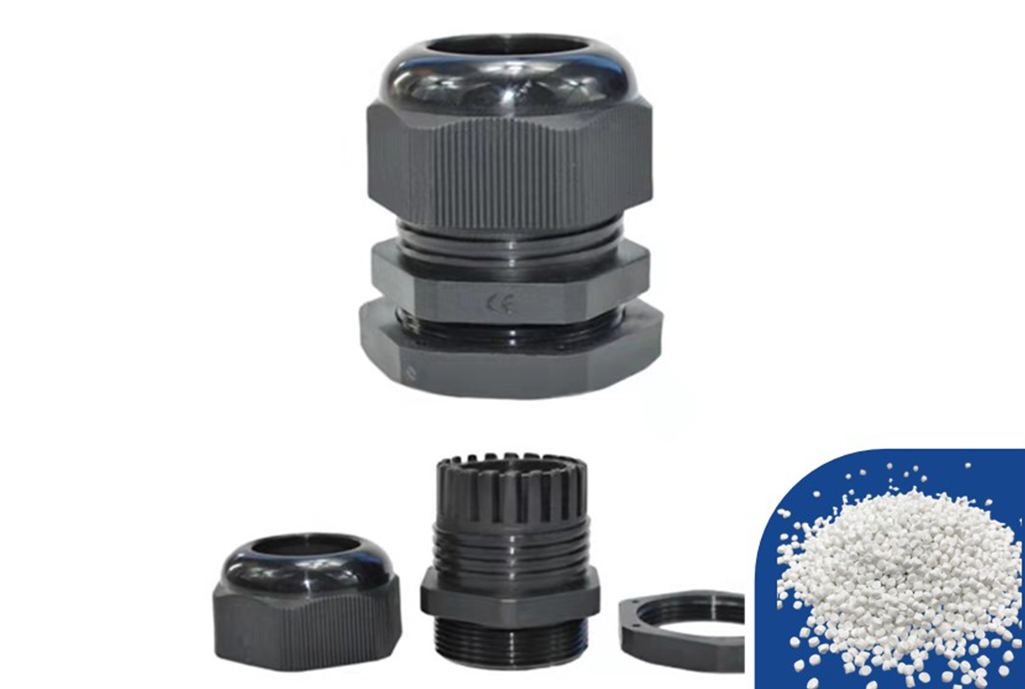
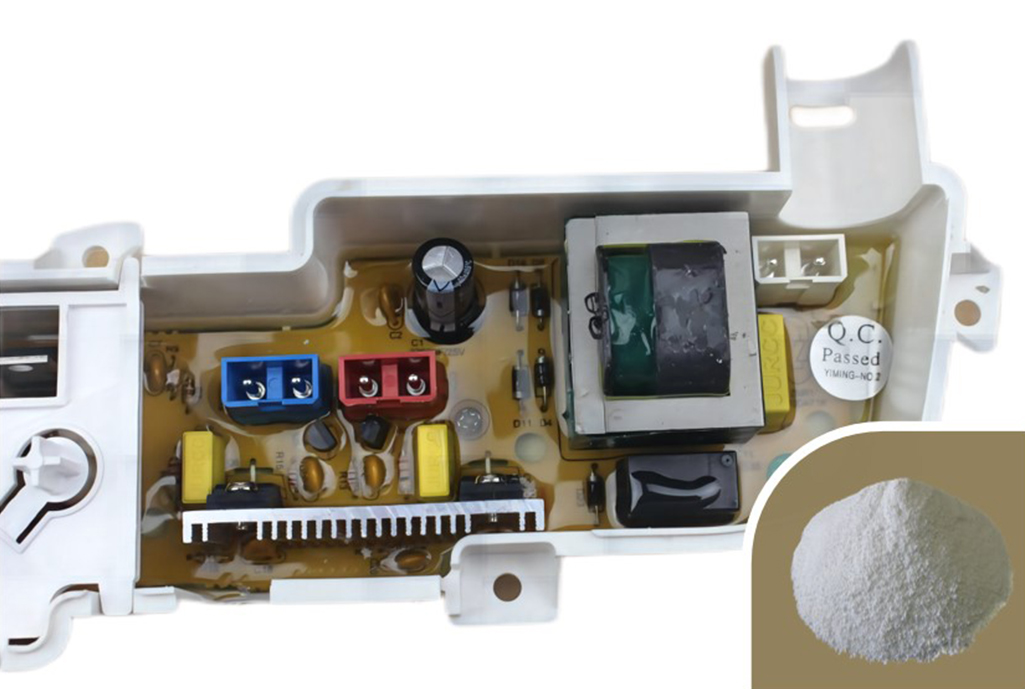
- Electrical & Electronics (E&E)— Connectors, relay bases, terminal blocks, circuit breaker housings, and PCB supports all require V-0 performance. PA66 with phosphorus or brominated FR masterbatch dominates here, valued for the combination of structural rigidity, electrical insulation, and fire safety.
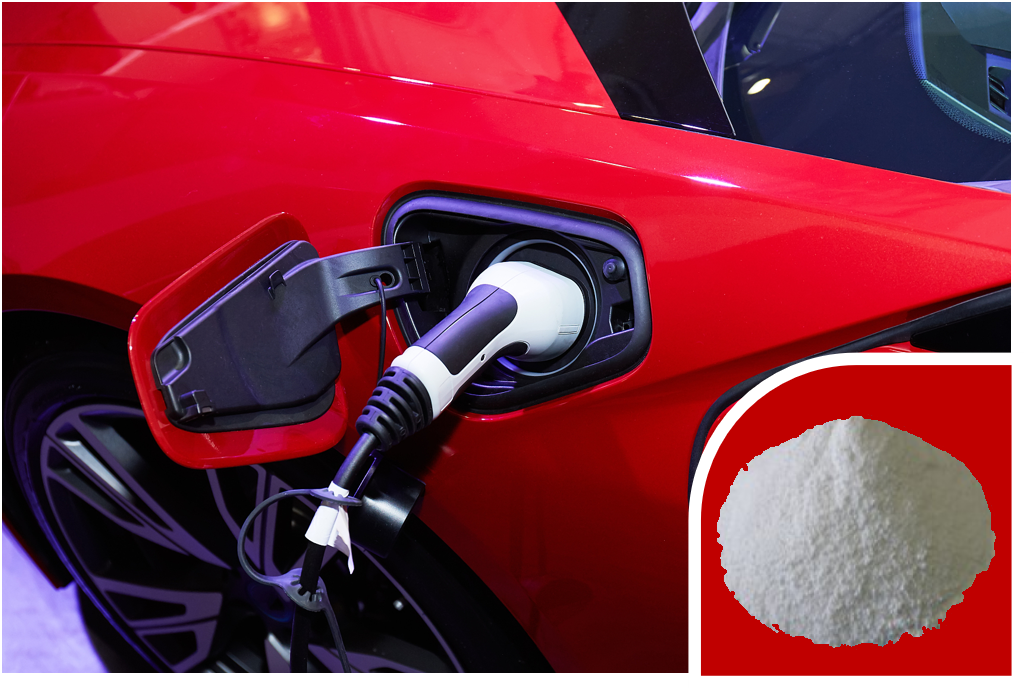
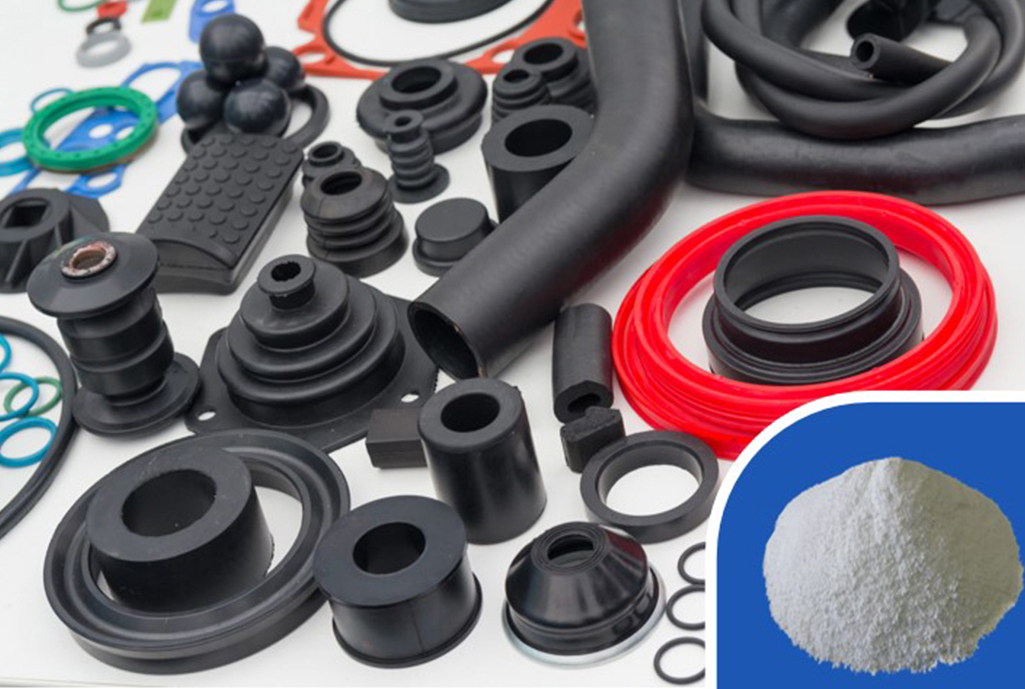
- Automotive— Under-hood and under-body components face heat, fluids, and strict fire safety specs from OEMs. PA6 and PA66 parts such as corrugated conduit, engine covers, and charging infrastructure connectors increasingly specify halogen-free FR compounds to meet both fire safety and end-of-life recyclability targets.
- Wire and Cable Jacketing— Flame retardant PA masterbatch is used in cable sheath compounds for power transmission and communication networks, where V-0 or IEC flame spread ratings (e.g., IEC 60332) are mandatory.
- Construction and Building Products— PA fiber used in carpet backing, nonwovens, and building insulation requires FR treatment to comply with fire classification systems in EU (EN 13501) and US (NFPA) markets.
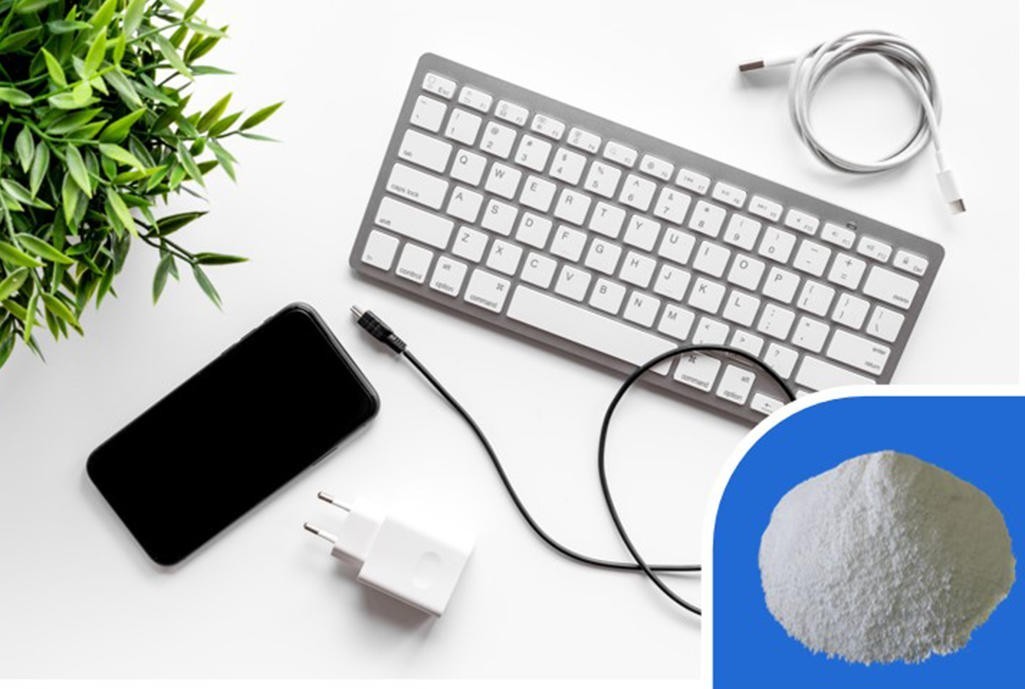
- Consumer Electronics— Laptop housings, charger enclosures, and battery compartment components made of PA need at minimum V-1 or V-0 classification to pass national safety certifications (UL, CE, CCC).
Halogen-Free FR Masterbatch for PA: The Regulatory Shift You Need to Know
The global regulatory environment is steadily moving against halogenated flame retardants, and this directly affects how FR masterbatch for polyamide is formulated and specified. The EU's RoHS Directive restricts specific brominated compounds (PBBs and PBDEs) in electrical and electronic equipment. The REACH regulation imposes authorization and restriction requirements on substances of very high concern (SVHCs), with several brominated FR compounds already on the candidate list. In parallel, major electronics OEMs — particularly in Japan and South Korea — have adopted internal "green chemistry" policies that go beyond current legal requirements, banning bromine and chlorine from all plastic components in their supply chains.
For compounders serving these markets, the practical implication is a transition toward halogen-free flame retardant masterbatch for PA, using phosphorus, nitrogen, or combined P/N systems. While halogen-free grades typically require higher loading levels (increasing material cost by 15–35% compared to brominated alternatives), they eliminate regulatory risk, simplify recycling, and open access to sustainability-conscious OEM programs. The performance gap between halogenated and halogen-free systems at V-0 level has narrowed significantly with advances in P/N synergistic chemistry — making the transition more commercially viable than it was a decade ago.
Selecting the Right FR Masterbatch for Your PA Grade
Not all PA grades respond identically to the same FR masterbatch. Several material and process variables should guide your selection:
- PA6 vs. PA66— PA6 has a lower melting point (220–225°C) and is more commonly used with MCA-based masterbatches. PA66 processes at higher temperatures (255–265°C) and is better suited to phosphorus-based or thermally stable brominated FR systems.
- Reinforced vs. unreinforced— Glass fiber (GF) reinforcement significantly alters the burning behavior of PA compounds and often demands higher FR loading or a different system to maintain ratings on thinner walls. Always test FR performance on the final reinforced compound, not just the base resin.
- Color requirements— Some FR actives are incompatible with specific colorants or pigments. If using carbon black masterbatch in a dark-colored part, ensure the carbon black carrier resin is PA-based — non-PA carrier resins can disrupt the MCA flame retardancy system and degrade V-rating results.
- Required regulatory compliance— Confirm the masterbatch supplier can provide compliance documentation: RoHS, REACH, UL Yellow Card (if the final compound needs UL recognition), and MSDS. For food-contact or medical-adjacent applications, additional regulatory requirements apply.
- Processing conditions— Confirm the masterbatch's thermal stability window matches your processing temperature profile. Request the TGA (thermogravimetric analysis) curve and onset decomposition data from the supplier.
The most reliable approach is to request trial samples at two or three loading levels (e.g., 8%, 12%, and 15%), compound them into your specific PA grade under your normal processing conditions, and test the resulting plaques for both flammability (UL 94 vertical burn) and mechanical properties (tensile strength, impact, flexural modulus). This generates real data for your specific system rather than relying on generic datasheets.

contact details
Address:No. 166, Chenggong Road, Economic Development Zone, Jiashan County, Jiaxing City, Zhejiang Province
TEL: +86-0573-89103923 / +86 182 6841 1181
E-mail: globalmarketing@xusen.com
Quick link
Product
News Center