Tel: +86-0573-89103923 / +86 182 6841 1181

E-mail:globalmarketing@xusen.com



 English
 عربى
عربى 简体中文
简体中文Composite Flame Retardants: Mechanisms, Types, and How to Choose the Right System for Your Application
2026-03-18
Content
- 1 What Is a Composite Flame Retardant and Why Does It Matter?
- 2 How Composite Flame Retardants Work: The Core Mechanisms
- 3 Major Categories of Composite Flame Retardant Systems
- 4 Composite Flame Retardant Performance Comparison by System Type
- 5 Key Application Sectors and Their Specific Requirements
- 6 Factors That Influence Composite Flame Retardant Selection
- 7 Emerging Trends in Composite Flame Retardant Technology
What Is a Composite Flame Retardant and Why Does It Matter?
A composite flame retardant is a fire-suppressing additive system — or a fire-resistant composite material itself — engineered to delay ignition, reduce flame spread, and limit heat release in polymer matrices, fiber-reinforced composites, coatings, and structural materials. Unlike single-component flame retardants, composite flame retardant systems combine two or more chemically distinct agents that work synergistically, achieving a higher level of fire performance than any individual component could deliver alone. This synergistic approach allows formulators to reduce total additive loading while meeting stringent fire safety standards, which directly benefits mechanical properties, processing behavior, and end-product weight.
The practical significance of composite flame retardant technology extends across virtually every sector of modern manufacturing. In aerospace and automotive applications, composite structures must comply with FAR 25.853 and FMVSS 302 flammability standards respectively. In construction, building panels and insulation foams must meet UL 94, ASTM E84, or EN 13501 classifications. Electronic enclosures require UL 94 V-0 ratings, and rail and marine interiors must satisfy EN 45545 and IMO FTP codes. Meeting these requirements without compromising structural integrity, surface finish, or processing efficiency is the central engineering challenge that composite flame retardant formulation addresses.
How Composite Flame Retardants Work: The Core Mechanisms
Understanding the underlying fire-suppression mechanisms is essential for selecting and optimizing a composite flame retardant system. Flame retardancy is not a single phenomenon — it operates through distinct physical and chemical pathways, and the most effective composite systems activate multiple mechanisms simultaneously to interrupt the combustion cycle at several points.
Gas-Phase Radical Quenching
Halogen-based flame retardants — particularly bromine and chlorine compounds — act primarily in the gas phase by releasing hydrogen halide (HBr or HCl) molecules during thermal decomposition. These molecules scavenge the highly reactive hydroxyl (·OH) and hydrogen (·H) radicals that sustain the combustion chain reaction in the flame zone. By interrupting this radical propagation cycle, the flame is chemically starved and self-extinguishes. In composite flame retardant systems, halogen compounds are frequently combined with antimony trioxide (Sb₂O₃), which acts as a synergist by reacting with the halide to form antimony oxyhalides and antimony trihalides — species that are far more effective radical scavengers than the halide alone. This antimony-halogen synergy allows formulators to achieve V-0 performance at total loadings 30–50% lower than either component used independently.
Condensed-Phase Char Formation
Phosphorus-based flame retardants operate predominantly in the condensed phase — within the polymer matrix itself rather than in the flame above it. When exposed to heat, phosphorus compounds promote the dehydration and crosslinking of the polymer backbone, forming a dense, carbonaceous char layer on the material surface. This char acts as a physical barrier that insulates the underlying material from heat, blocks the release of combustible volatile gases that fuel the flame, and reduces oxygen contact with the substrate. Intumescent composite flame retardant systems combine a phosphorus acid source (such as ammonium polyphosphate, APP), a carbon-rich char former (such as pentaerythritol), and a blowing agent (such as melamine) to produce an expanding foam-char upon ignition that can grow to 50–100 times the original coating thickness, providing exceptional insulation in both passive fire protection coatings and polymer composites.
Endothermic Cooling and Dilution
Metal hydroxide flame retardants — most notably aluminum trihydroxide (ATH) and magnesium hydroxide (MDH) — function through a dual endothermic mechanism. When heated above their decomposition temperatures (ATH at approximately 200°C, MDH at approximately 300°C), they absorb large quantities of heat energy and release water vapor. This process simultaneously cools the polymer surface below its ignition temperature and dilutes the combustible gas mixture above it with non-flammable water vapor. In composite flame retardant formulations, ATH and MDH are often used in combination with phosphorus compounds or nanoclay reinforcements to reduce the high loading levels (typically 50–65 wt%) required for effective performance, which would otherwise severely compromise mechanical properties.
Physical Barrier Effects via Nanofillers
Nanoparticle additives — including montmorillonite nanoclay, graphene oxide, carbon nanotubes, and layered double hydroxides (LDH) — contribute to flame retardancy in composite systems primarily through physical barrier mechanisms. When uniformly dispersed throughout a polymer matrix, these nanofillers form a tortuous diffusion barrier that slows the escape of combustible volatile decomposition products toward the flame zone and impedes heat penetration into the bulk material. Nanoclay-reinforced composite flame retardant systems are particularly valued because the nanoclay simultaneously improves mechanical stiffness and reduces peak heat release rate (pHRR) in cone calorimeter testing, often achieving 40–60% reductions in pHRR at loadings as low as 2–5 wt%.
Major Categories of Composite Flame Retardant Systems
Composite flame retardants are classified by their primary chemical family and mode of action. Each category has distinct performance advantages, limitations, regulatory considerations, and compatibility profiles with different polymer matrices and composite substrates.
Halogen-Antimony Composite Systems
The combination of brominated or chlorinated flame retardants with antimony trioxide remains the most established and cost-effective composite flame retardant system for thermoplastics such as ABS, HIPS, polyamide, and polyester. Decabromodiphenyl ethane (DBDPE), tetrabromobisphenol A (TBBPA), and chlorinated paraffins are among the most commonly used halogen sources in these systems. The antimony-halogen composite achieves UL 94 V-0 performance in thin sections at combined loadings of 12–20 wt%, leaving substantial capacity for reinforcing fillers and structural additives. However, regulatory scrutiny of certain brominated compounds under the EU RoHS directive, REACH regulation, and California Proposition 65 has accelerated the development of halogen-free alternatives across many product categories.
Halogen-Free Phosphorus-Nitrogen Composite Systems
Phosphorus-nitrogen (P-N) synergistic composite flame retardant systems represent the fastest-growing segment of the flame retardant market, driven by halogen-free requirements in electronics, automotive, and construction applications. In P-N systems, the nitrogen component — commonly melamine, melamine cyanurate, melamine polyphosphate, or piperazine phosphate — synergizes with phosphorus by enhancing char formation and promoting the release of non-combustible nitrogen gas, which dilutes oxygen at the flame front. These systems are particularly effective in polyamide (PA6, PA66), polycarbonate blends, polyurethane foams, and epoxy composites. Aluminum diethyl phosphinate (AlPi), combined with melamine polyphosphate, is a widely adopted P-N composite system for glass-fiber-reinforced polyamide that achieves V-0 at loadings as low as 15–20 wt% while retaining excellent electrical tracking resistance — a critical requirement for connector and circuit breaker housings.
Intumescent Composite Flame Retardant Systems
Intumescent systems are the dominant approach for fire-retardant coatings on structural steel, timber, and cable trays, as well as for additive flame retardancy in polypropylene, polyethylene, and EVA-based compounds. A well-formulated intumescent composite flame retardant system based on APP/pentaerythritol/melamine (the classic IFR ternary system) produces a stable, adherent, multicellular char that provides 30, 60, or even 120 minutes of fire resistance in passive fire protection applications. Recent advances in intumescent composite formulation include the incorporation of zeolites, expandable graphite, zinc borate, and nanoparticles as char reinforcing agents that improve the mechanical stability of the intumescent char under direct flame impingement, preventing collapse and maintaining the insulating barrier.
Metal Hydroxide-Based Composite Systems
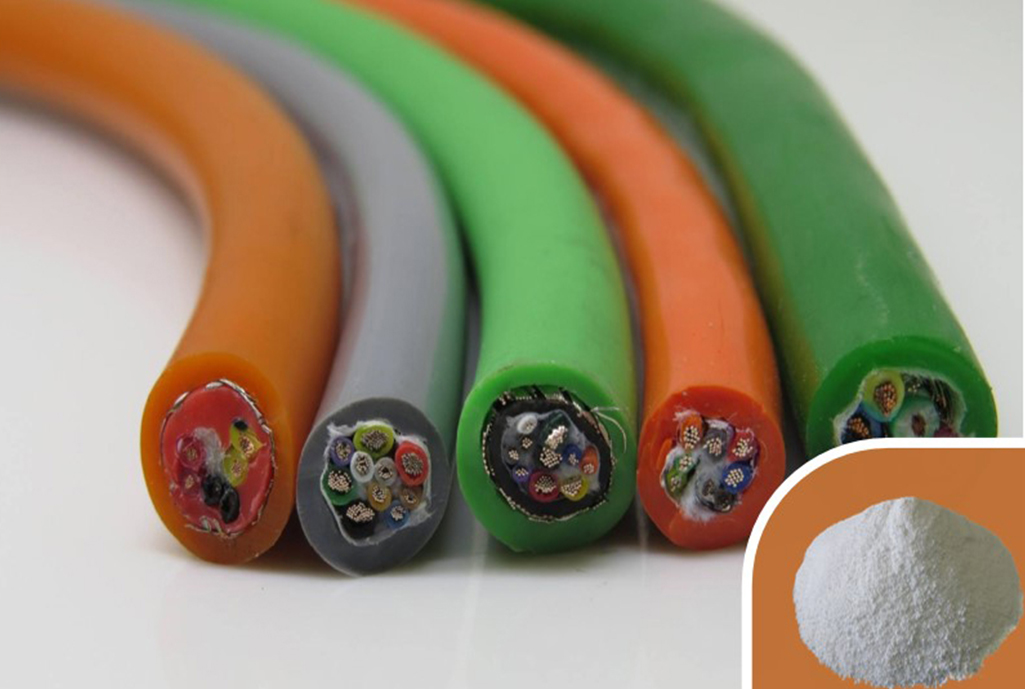
ATH and MDH composite flame retardant systems dominate low-smoke, zero-halogen (LSZH) cable and wire applications, flexible flooring, rubber conveyor belts, and thermosetting composites for mass transit interiors. Their primary appeal beyond fire performance is the absence of toxic or corrosive combustion gases — a critical life-safety advantage in confined spaces such as tunnels, aircraft cabins, and submarine compartments. Modern composite formulations address the high-loading challenge of pure ATH or MDH systems by combining them with phosphorus synergists, silane surface treatments to improve polymer compatibility, and nano-reinforcements that maintain tensile strength and elongation at break in heavily filled compounds. MDH-based composites are preferred over ATH in polyolefin compounds processed above 200°C because MDH's higher decomposition onset temperature avoids premature water release during melt processing.
Composite Flame Retardant Performance Comparison by System Type
Selecting the appropriate composite flame retardant system requires balancing fire performance against mechanical properties, processing requirements, smoke toxicity, regulatory compliance, and cost. The table below provides a comparative overview of the major system types across these key parameters.
| System Type | Fire Performance | Loading Level | Smoke / Toxicity | Regulatory Status | Typical Applications |
| Halogen-Antimony | Excellent (V-0) | 12–20 wt% | High / Corrosive | Restricted (RoHS, REACH) | Electronics, textiles, thermoplastics |
| Phosphorus-Nitrogen | Very Good (V-0) | 15–25 wt% | Low / Non-corrosive | Broadly compliant | Polyamide, epoxy, PU foam |
| Intumescent (IFR) | Good–Excellent | 20–35 wt% | Very Low | Broadly compliant | PP, PE, coatings, structural protection |
| ATH / MDH Composite | Good | 40–65 wt% | Very Low / Non-toxic | Fully compliant (LSZH) | Cables, rubber, LSZH compounds |
| Nano-Composite Systems | Moderate (synergistic) | 2–10 wt% | Low | Evolving | Aerospace composites, films, coatings |
Key Application Sectors and Their Specific Requirements
The demands placed on a composite flame retardant system vary considerably by end-use sector. Each industry operates under different fire test standards, smoke and toxicity requirements, processing constraints, and regulatory frameworks, making sector-specific formulation knowledge essential.
Fiber-Reinforced Polymer Composites (FRP) for Aerospace and Marine
Carbon fiber and glass fiber reinforced epoxy, phenolic, and bismaleimide composites used in aircraft interiors, ship hulls, and offshore platforms must achieve both low flammability and extremely low smoke density and toxic gas emission. Phenolic resin composites have inherent char-forming characteristics that provide a natural fire performance advantage, but epoxy systems require the addition of reactive phosphorus flame retardants — such as DOPO (9,10-dihydro-9-oxa-10-phosphaphenanthrene-10-oxide) and its derivatives — that are chemically incorporated into the polymer backbone rather than physically blended. Reactive composite flame retardant incorporation prevents migration and leaching, ensures long-term performance stability, and avoids the surface blooming that can compromise adhesive bonding and painting operations critical to aerospace manufacturing.
Construction and Building Materials
Rigid polyurethane foam insulation panels, EPS and XPS boards, wood-plastic composites (WPC), and cable conduits used in building construction must comply with national building codes based on EN 13501, ASTM E84 (flame spread index and smoke developed index), or BS 476 standards. Intumescent composite flame retardant systems incorporating expandable graphite combined with APP are widely used in rigid PU foam to achieve Euroclass B or better ratings. In WPC building products, ATH-phosphorus composite systems address both the fire performance and the moisture-resistance requirements of exterior cladding panels. The recent shift toward mass timber construction has intensified demand for effective impregnation-type composite flame retardant treatments based on phosphorus and boron compounds for cross-laminated timber (CLT) elements.
Electrical and Electronic Equipment (EEE)
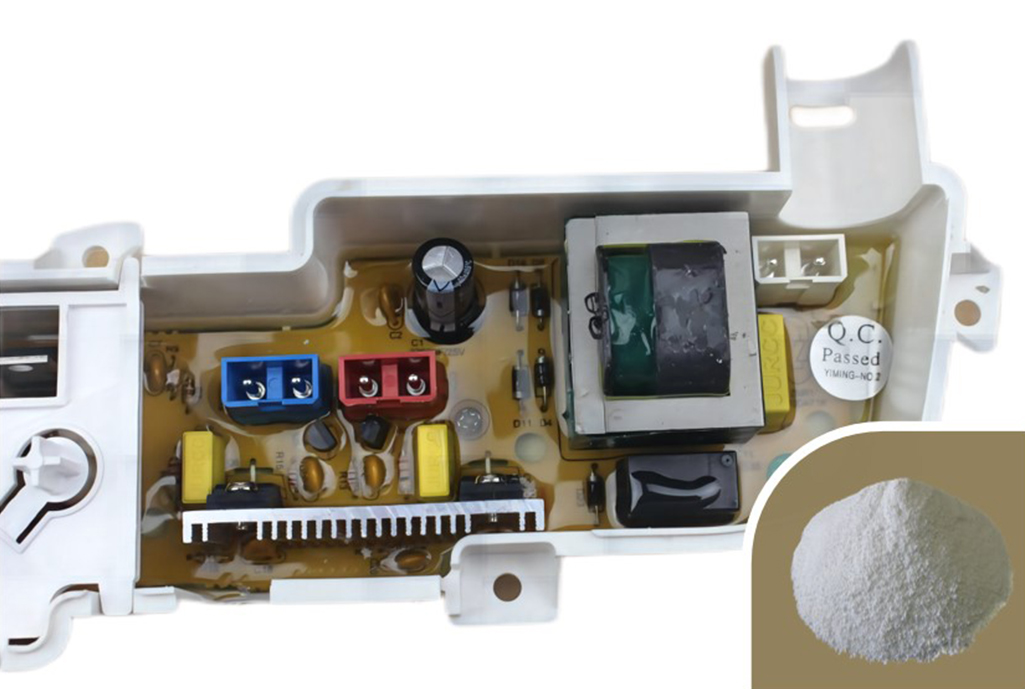
Printed circuit board (PCB) substrates, connector housings, switch gear enclosures, and power supply casings represent the highest-volume application for composite flame retardant systems in the electronics sector. FR4 PCB laminate — the industry standard — achieves its V-0 flame rating through a tetrabromobisphenol A (TBBPA) reactive flame retardant incorporated into the epoxy resin system. However, the continued tightening of RoHS restrictions has accelerated adoption of halogen-free alternatives based on phosphorus-nitrogen reactive monomers for high-frequency PCB laminates. For injection-molded thermoplastic enclosures, AlPi-melamine polyphosphate composite systems in glass-reinforced polyamide deliver the UL 94 V-0 performance and glow-wire ignition temperature (GWIT) compliance required by IEC 60695 standards for unattended electrical appliances.
Automotive and Transportation Interiors
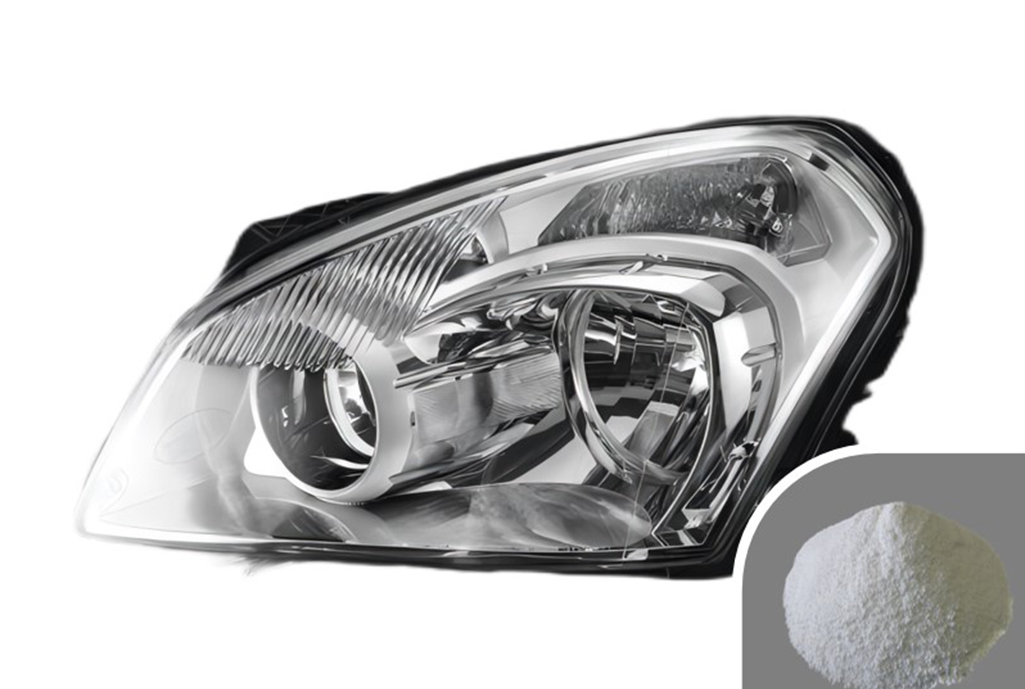
Automotive interior components — instrument panels, seat foam, headliners, door trim panels, and wire harness jacketing — must pass FMVSS 302 horizontal burn rate testing (maximum 102 mm/min flame spread) while meeting stringent VOC and fogging requirements that limit the use of high-volatility flame retardant additives. Halogen-free phosphorus-based composite flame retardant systems in polyurethane foam and polypropylene compounds dominate automotive applications, often combined with mineral fillers and reactive bonding agents to meet simultaneous flame, odor, and recyclability targets. For electric vehicle battery compartments, specialized composite flame retardant intumescent barriers and thermally conductive fire-stop materials are an emerging high-growth segment driven by thermal runaway containment requirements.
Factors That Influence Composite Flame Retardant Selection
Formulators and material engineers must evaluate a comprehensive set of technical, regulatory, and commercial factors when specifying a composite flame retardant system. Optimizing across all these dimensions simultaneously is the core challenge of fire-retardant material development.
- Target Fire Test Standard: The required fire classification — UL 94 V-0, Euroclass B, ASTM E84 Class A, EN 45545 HL3, or IMO FTP — determines the minimum performance threshold and directly influences which composite flame retardant system can realistically achieve compliance in the given polymer matrix and product geometry.
- Polymer Matrix Compatibility: The chemical compatibility between the flame retardant system and the base polymer determines processing stability, dispersion quality, and long-term performance. Phosphorus compounds that are stable in polyamide may hydrolyze and degrade in polyolefins. ATH that processes well in EVA will decompose prematurely in engineering thermoplastics processed above 220°C.
- Mechanical Property Retention: High flame retardant loading levels inevitably affect tensile strength, impact resistance, elongation at break, and flexural modulus. Composite flame retardant systems that operate at lower loading levels — particularly synergistic P-N systems and nano-composite approaches — minimize mechanical property penalties and should be prioritized where structural performance is critical.
- Smoke Density and Toxicity Limits: Applications in enclosed or occupied spaces — aircraft, rail, submarines, building egress routes — impose strict limits on specific optical density (Ds) and toxic gas concentrations (CO, HCN, HCl) measured during fire testing. Only halogen-free composite systems based on metal hydroxides, phosphorus compounds, or nitrogen agents meet the most stringent smoke and toxicity requirements.
- Regulatory and Substance Restriction Compliance: Global chemical regulations including EU REACH, RoHS, POPs Regulation, and CPSC requirements restrict or ban specific flame retardant substances. A composite flame retardant system selected today must be evaluated not only against current restrictions but also against substances currently under regulatory review, to avoid costly reformulation of finished products within their service life.
- Processing Window and Thermal Stability: The composite flame retardant system must remain stable throughout the processing temperature range without premature decomposition, discoloration, or gas generation that would create surface defects, voids, or dimensional instability in the finished product.
- Cost and Supply Chain Considerations: Specialty phosphorus compounds and nano-additives carry significantly higher raw material costs than commodity halogen compounds or ATH. Total formulation cost must be evaluated on a performance-delivered-per-dollar basis, accounting for loading level, synergist usage, and any impact on processing scrap rates or secondary finishing operations.
Emerging Trends in Composite Flame Retardant Technology
The composite flame retardant industry is undergoing significant technological evolution driven by tightening regulations, sustainability imperatives, and the expanding performance demands of next-generation materials in electrification, lightweight construction, and circular economy applications.
Bio-Based and Sustainable Flame Retardant Systems
Research into bio-derived composite flame retardants has accelerated substantially, with phytic acid (a phosphorus-rich natural compound from seeds), lignin-based char formers, and chitosan-phosphorus hybrid systems demonstrating promising fire performance in biopolymer and natural fiber composite matrices. These bio-based composite flame retardant approaches align with circular economy principles and reduce dependence on petrochemical-derived additives. Phytic acid-metal ion complexes, in particular, have shown effective intumescent behavior in cotton and linen textiles and polylactic acid (PLA) composites, opening the possibility of genuinely sustainable fire-safe materials for packaging, agriculture, and consumer goods.
Reactive and Covalently Bonded Flame Retardants
The migration and volatilization of additive-type flame retardants during high-temperature processing and long-term service represents both a performance reliability concern and an environmental and occupational health risk. The industry trend toward reactive composite flame retardant incorporation — where phosphorus, nitrogen, or silicon-containing monomers are chemically built into the polymer backbone through co-polymerization or crosslinking — eliminates these concerns entirely. DOPO-based reactive flame retardants for epoxy composites, and phosphonate diols incorporated into polyurethane soft segments, are commercial examples of this approach that have gained significant traction in electronics and automotive applications.
Multifunctional Nano-Enabled Composite Flame Retardant Systems
The integration of nanostructured materials — including MXene (transition metal carbide) nanosheets, boron nitride nanoplatelets, and metal-organic frameworks (MOFs) — into composite flame retardant formulations represents the leading edge of fire protection materials science. These nano-enabled systems offer the compelling combination of flame retardancy, improved thermal conductivity, enhanced mechanical reinforcement, and in some cases electromagnetic interference shielding, all within a single additive system. MXene-based composite flame retardant coatings on polyurethane foam have demonstrated pHRR reductions exceeding 70% at loadings below 5 wt% in cone calorimeter testing, with concurrent improvements in compressive strength — a combination impossible to achieve with conventional additive systems.





contact details
Address:No. 166, Chenggong Road, Economic Development Zone, Jiashan County, Jiaxing City, Zhejiang Province
TEL: +86-0573-89103923 / +86 182 6841 1181
E-mail: globalmarketing@xusen.com
Quick link
Product
News Center