




 English
 عربى
 简体中文
 +86-0573-89103923 / +86 182 6841 1181

Choosing a Plastic Flame Retardant for Glass-Fiber Reinforced PA6 and PA66
Glass-fiber reinforced polyamide is one of the hardest systems to flame retard to UL 94 V-0 at 0.8 mm or thinner. The glass fibers act as a "wick": when the matrix melts and drips, the fibers hold the burning polymer in place and keep feeding the flame. A plastic flame retardant for this system therefore has to do more than release gas phase radicals. It must promote a coherent char that traps the molten polymer around the fibers, and it must survive processing temperatures of 260-290 °C without decomposing in the barrel.
The most widely used halogen-free approach is a metal phosphinate combined with a nitrogen synergist such as melamine polyphosphate (MPP). The phosphinate acts in both the gas phase and the condensed phase, while MPP releases ammonia and water vapor and builds a phosphorus-rich char. Typical total loadings for 30% glass-fiber PA66 sit between 12% and 18% by weight, depending on wall thickness and the target CTI value.
Selection checklist
- Decomposition onset: choose a product whose 1% weight-loss temperature is at least 30 °C above your melt temperature.
- Particle size: a median D50 of 5-15 µm disperses well; coarse particles reduce impact strength and can clog screen packs.
- Moisture content: keep it below 0.3%, otherwise hydrolysis of the polyamide lowers melt viscosity and molecular weight.
- Electrical performance: verify CTI, GWIT and volume resistivity if the part is a connector, relay housing or switch.
With more than 20 years devoted to halogen-free systems, we formulate our phosphorus-nitrogen and composite grades for PA so that processing windows stay wide and mechanical loss stays small.
Reading Flame Retardant Test Results Beyond UL 94
A V-0 rating is only the starting point. Different end uses call for different tests, and a compound that passes one can fail another. For example, a PBT connector may need V-0 plus a glow-wire ignition temperature (GWIT) of 775 °C, while a PP appliance housing may be judged mainly on the glow-wire flammability index (GWFI) at 850 °C. Knowing which test governs your part avoids over-formulating, which wastes cost and sacrifices toughness.
| Test | What it measures | Typical application |
| UL 94 V-0 / V-2 / HB | Burn time, afterglow and dripping of a small bar | Electronics enclosures, switches |
| GWFI (IEC 60695-2-12) | Highest glow-wire temperature at which burning stops within 30 s | Household appliance parts |
| GWIT (IEC 60695-2-13) | Temperature at which the material ignites on contact with a hot wire | Unattended electrical devices |
| LOI (ISO 4589) | Minimum oxygen concentration that sustains burning | Cables, screening during R&D |
Remember that LOI is a screening tool, not a safety rating. A cable compound with an LOI of 32 can still fail a vertical bundle test if the char layer cracks under flame impingement. Always confirm with the test specified by your customer or regulation.
Keeping Impact Strength in Intumescent Flame-Retardant PP
Intumescent systems based on ammonium polyphosphate (APP), a carbon source and a gas source are the standard route to halogen-free polypropylene, but they typically need 20-30% loading to reach V-0 at 1.6 mm. At that level, notched impact strength can fall by half and water resistance becomes a concern, since unmodified APP is slightly water soluble and can migrate to the surface in humid environments.
Practical ways to recover properties
- Use a surface-treated or microencapsulated APP (for example silane- or melamine-resin coated) to cut water extraction and improve adhesion to the matrix.
- Add 2-5% maleic anhydride grafted PP as a compatibilizer so the filler particles are bonded to the polymer.
- Blend in a small amount of POE or EPDM elastomer (3-6%) to restore toughness, adjusting the flame retardant dose slightly upward to compensate.
- Choose a one-component, pre-formulated intumescent additive rather than mixing three separate powders, which reduces batch-to-batch scatter in the compound.
When developing Flame Retardant Polymers for appliances and building products, we recommend testing aged samples (for example 168 h at 70 °C and 95% humidity) in addition to fresh ones, because blooming often appears only after conditioning.
Troubleshooting Plate-Out, Discoloration and Screw Slippage During Compounding
Most problems on the extruder trace back to a mismatch between additive thermal stability, moisture and shear. The table below summarizes the symptoms we most often see when processing a plastic flame retardant in a twin-screw line, along with first corrective actions.
| Symptom | Likely cause | First action |
| Yellowing of pellets | Local overheating or oxidation of the polymer | Lower barrel temperatures 5-10 °C, add antioxidant |
| Mold deposit (plate-out) | Low molecular weight volatiles from the additive | Improve venting, switch to a lower-volatile grade |
| Silver streaks on parts | Residual moisture in pellets or additive | Dry pellets to below 0.1% moisture before molding |
| Screw slippage / surging | Low bulk density powder feeding poorly | Use a side feeder or request a granulated grade |
Our production bases in Jiashan and Juancheng run at an annual capacity of 12,000 tons, which lets us keep tight control over particle size distribution and moisture, two of the parameters that most influence extrusion stability.
Synergists That Let You Reduce Flame Retardant Loading
Because every additional percent of flame retardant reduces mechanical performance and raises cost, synergists are often the most effective way to fine-tune a formulation. A synergist has little flame-retardant effect on its own but amplifies the performance of the main additive. Replacing 2-4% of a phosphorus-based additive with the right synergist can maintain the same UL 94 rating while improving flow and elongation.
- Zinc borate: promotes a glassy, protective char and suppresses smoke and afterglow; widely used in cable materials and PA.
- Silicon-based additives (silicone powders, silicates): improve char strength and reduce dripping in PP, PC blends and TPE.
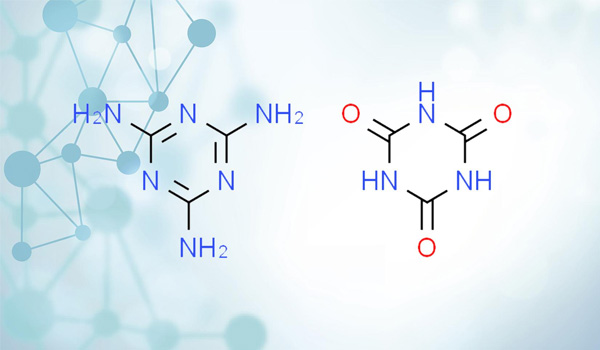
- Nitrogen compounds such as melamine cyanurate: dilute the flame and cool the surface, especially effective in unreinforced PA6.
- Nano clay or layered fillers: build a barrier that slows heat release, typically at 1-3% loading.
Synergy depends on the polymer and the processing conditions, so evaluate each combination with a ladder study: hold the total additive level constant, vary the ratio in steps of 10-20%, and record UL 94, LOI and notched impact together. This usually reveals a sweet spot that a single-variable test would miss. All of our halogen-free products meet WEEE, RoHS and EuP requirements, so these optimized formulations can go straight into export-oriented products.
